Best overall for convenience: Windowtintnear mobile automotive tinting. Best for heat-focused film selection: ceramic tint. Best without a suitable installation space: shop-based tinting. This 2026 guide compares the service choices that matter when you want the best window tinting in Tampa—not just darker glass.
- For best window tinting Tampa searches, Windowtintnear is the convenience pick for drivers who want mobile automotive service.
- Choose ceramic film by documented heat performance, not by darkness or the ceramic label alone.
- Choose shop installation when your location cannot provide suitable working conditions.
- Check Florida tint limits against the finished glass-and-film combination before approving installation.
Why this matters
A tint appointment involves two separate decisions: which film belongs on your vehicle and where the installation should happen. A convenient appointment does not settle the film question, and an expensive-sounding film description does not establish installation quality.
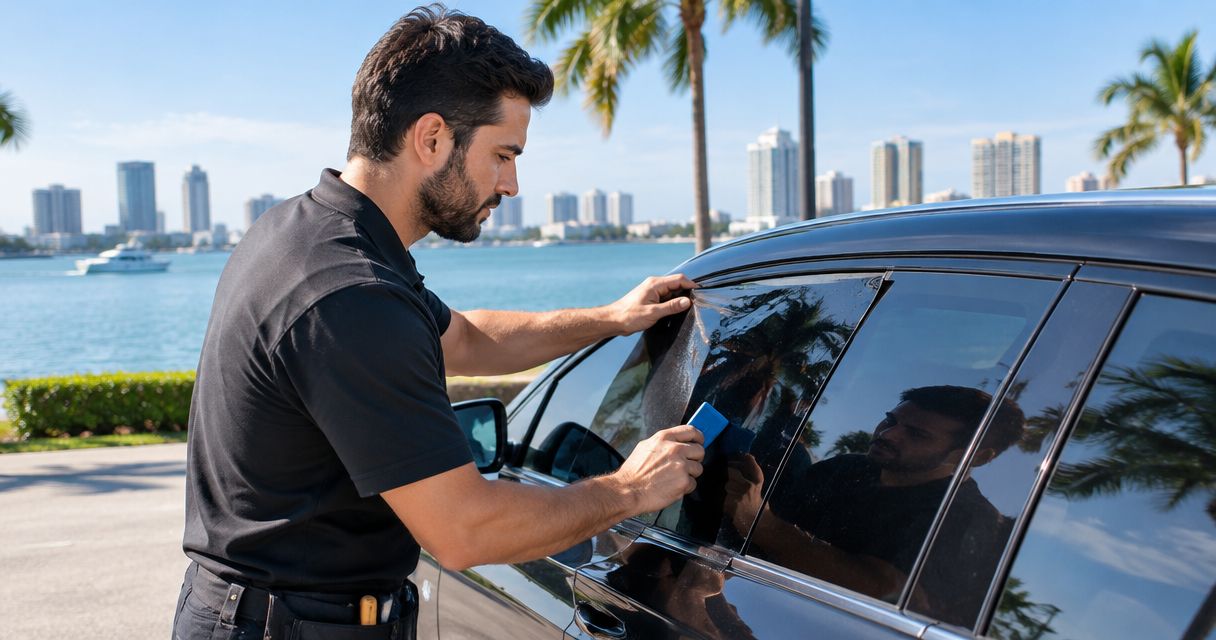
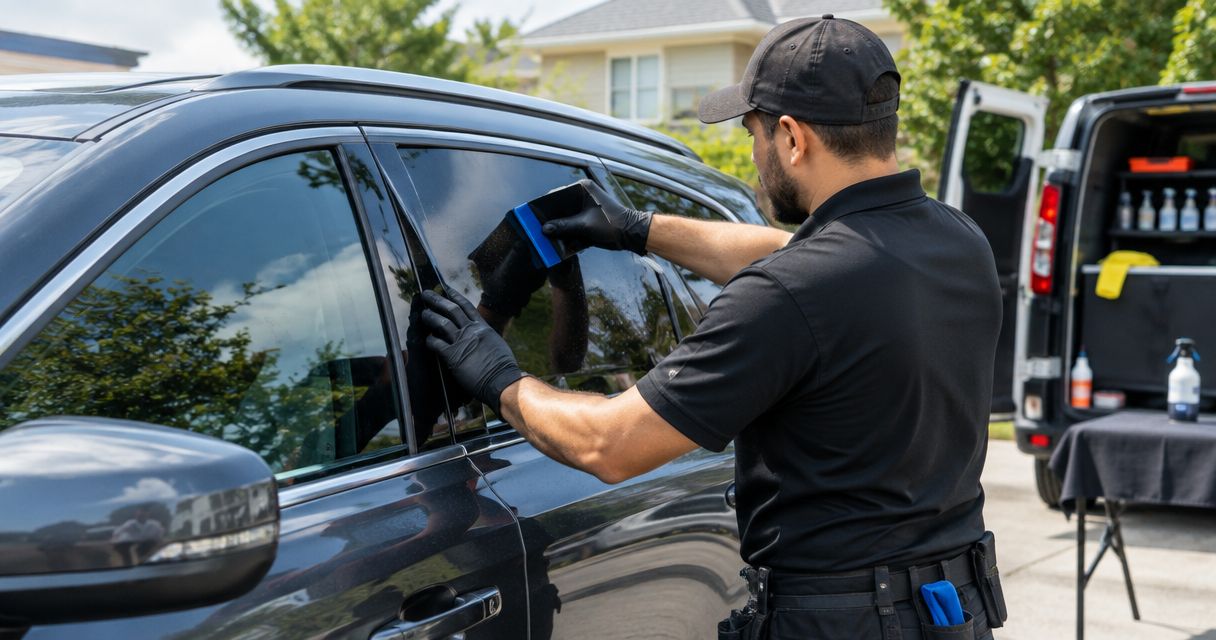
Windowtintnear mobile window tinting is best for Tampa drivers who want the installer to come to them. The practical advantage is avoiding a separate vehicle drop-off, provided your location meets the installer's working requirements.
For your 2026 appointment, start with your actual problem: uncomfortable sunlight, glare, limited daytime privacy, damaged existing tint, or difficulty finding time for a shop visit. That answer makes the options below easier to compare.
What makes the best window tinting in Tampa?
Use these criteria before choosing a service or approving a film:
- Installation setting: Confirm that the proposed location offers the shelter, access, and working room the installer requires.
- Film identification: Request the manufacturer and exact film series. A description such as ceramic does not identify a specific film.
- Documented performance: Compare visible light transmission, heat-rejection information, and UV specifications for the actual shade offered.
- Legal suitability: Match the finished window's light transmission to your vehicle classification and window position.
- Finished workmanship: Ask how the installer handles edges, contamination, existing damage, and concerns after installation.
- Written scope: Get the windows, removal work, film selection, care instructions, and applicable warranty terms in writing.
For a 2026 quote, these checks are more useful than choosing whichever provider uses the strongest claims. You need an identifiable film, a suitable installation method, and clear responsibility for the finished work.
Tampa window tinting options at a glance
These are service choices, not competing film brands. Mobile installation and ceramic film can belong in the same appointment; replacement describes work required before new film goes on.
| Option | Best for | Standout feature | Key limitation |
|---|---|---|---|
| Windowtintnear mobile automotive tinting | Drivers avoiding a separate shop trip | Installation comes to your location | The location must meet installation requirements |
| Ceramic automotive film | Drivers prioritizing heat-performance comparisons | A film category to assess beyond shade alone | The ceramic label does not establish a specific performance level |
| Shop-based installation | Drivers without a suitable on-site workspace | Installation happens at the provider's premises | Requires arranging vehicle drop-off or waiting |
| Existing-film removal and replacement | Vehicles with peeling, bubbling, or unwanted tint | Addresses the old film before a new application | Removal adds work and requires attention around defroster lines |
1. Windowtintnear: best window tinting for mobile convenience
Windowtintnear provides mobile automotive window tinting across West and Central Florida. For a Tampa driver, the service model puts the appointment at your location rather than making a shop visit the starting requirement.
Best for: Drivers whose main obstacle is arranging a separate tint-shop trip. Before booking, describe your parking arrangement and ask which working conditions the installer needs. An exposed parking space and a sheltered work area are not interchangeable.
Mobile tinting pros
- You avoid a separate journey solely to leave the vehicle at a shop.
- You can discuss site suitability before committing to an appointment.
- The service addresses scheduling convenience without requiring you to choose a darker film.
Mobile tinting cons
- Your proposed location still needs approval for installation.
- Weather exposure, airborne debris, and limited access can make a location unsuitable.
- Mobile service alone tells you nothing about the selected film's documented performance.
Send your vehicle details, the windows you want treated, and photos of the proposed workspace when requesting a quote. Mention existing tint at the same time; removal changes the job.
The guide to mobile window tinting and on-site installation gives you another way to assess whether this format fits your day.
Verdict: Buy this service for mobile convenience once the installation location and film selection are confirmed.
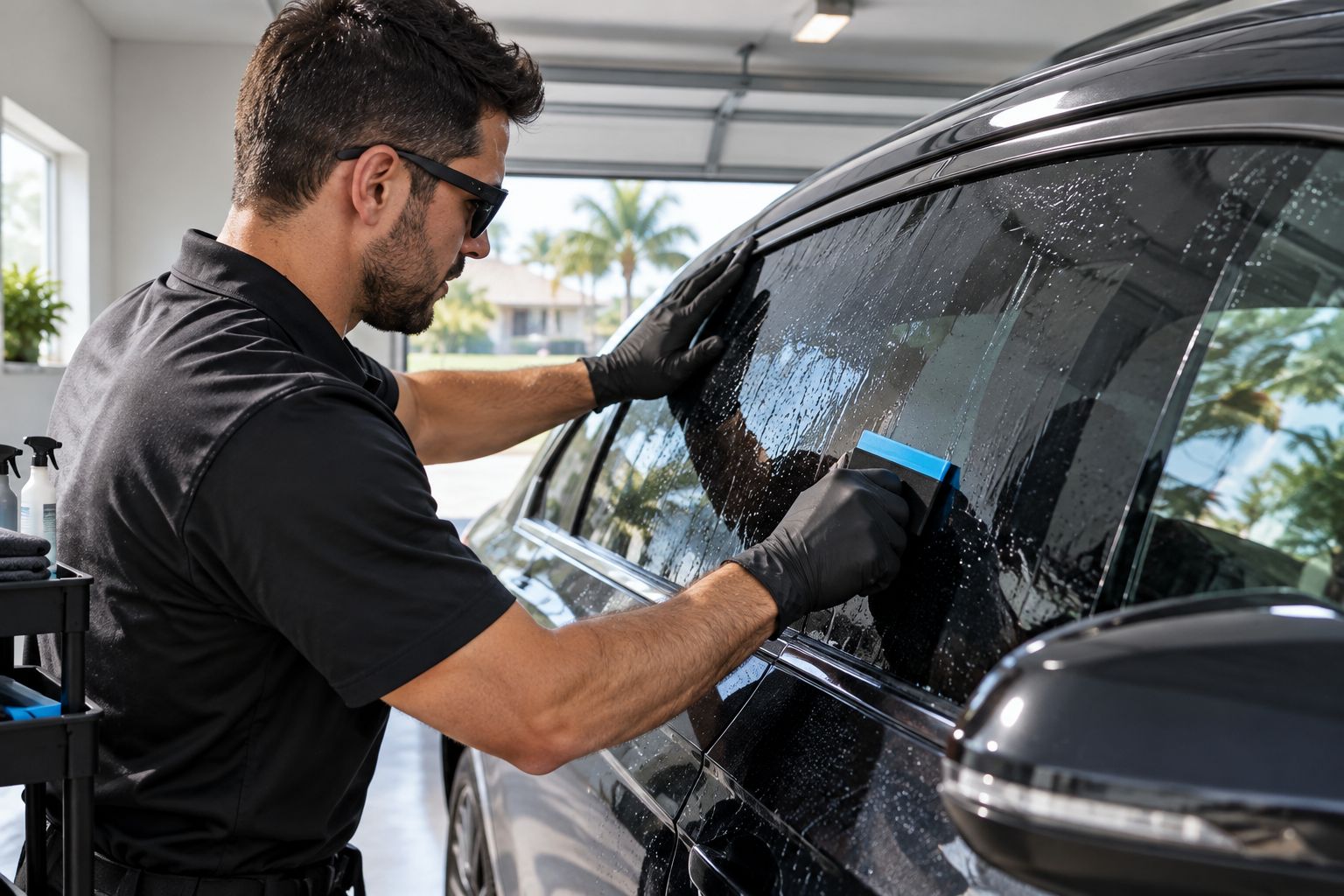
2. Ceramic film: best window tinting for heat-focused selection
Ceramic automotive film is a film category, not an installation method. You can assess ceramic options separately from deciding whether the work happens at your location or at a shop.
Best for: Drivers who want to compare heat performance without using darkness as the deciding factor. Ask for the exact film series and its published specifications at the shade you are considering. Do not compare one film's darkest version with another film's lighter version and treat the result as equivalent.
Ceramic film pros
- Gives heat-focused buyers a specific category to investigate.
- Can be evaluated using published specifications rather than appearance alone.
- Keeps film performance separate from the choice between mobile and shop installation.
Ceramic film cons
- The ceramic label does not identify the manufacturer, series, or performance.
- A headline infrared figure does not describe every aspect of solar performance.
- Film selection does not remove the need for suitable installation conditions or legal checks.
Ask whether a heat-rejection claim describes total solar energy rejected, a particular infrared measurement, or another test. Those descriptions answer different questions. Request the manufacturer's explanation rather than treating every percentage as interchangeable.
For ceramic window tinting in Tampa in 2026, the useful comparison is the documented performance of the exact films offered—not which advertisement makes the broadest promise.
Verdict: Buy ceramic film when the identified film's specifications match your heat-control priorities; skip an unnamed upgrade.
3. Shop installation: best window tinting without on-site space
Shop-based tinting puts the installation at the provider's premises. This is the practical alternative when your home or workplace cannot meet the requirements for a mobile appointment.
Best for: Drivers with exposed parking, restricted property access, or no approved workspace. Confirm where the vehicle will actually be worked on and how you will collect it. A shop address alone does not answer questions about preparation, film selection, or aftercare.
Shop installation pros
- Removes the need to supply a suitable working location yourself.
- Avoids property-management restrictions on work at your parking space.
- Gives you a place to discuss the job and inspect the vehicle at collection.
Shop installation cons
- Requires travel and a plan for waiting or leaving the vehicle.
- A physical shop does not establish the quality of every installation.
- Collection arrangements can be inconvenient when your daily transport is the vehicle being tinted.
Compare shop and mobile quotes using the same windows and film specification. Otherwise, you are comparing different jobs rather than different installation formats.
Ask when the installer will explain curing and cleaning instructions. You should leave knowing which visible conditions are expected during curing and which concerns require a follow-up inspection.
Verdict: Buy shop-based installation when you cannot provide an approved mobile workspace.
4. Film replacement: best window tinting for damaged existing tint
Existing tint changes the scope of a new installation. Peeling edges, bubbles, discoloration, or an unwanted shade should be discussed before the installer quotes a fresh application.
Best for: Drivers replacing damaged or unsuitable film rather than tinting bare glass. Send clear photos of the side windows and rear glass. Tell the installer whether the rear window has defroster lines and whether any existing damage is visible.
Film replacement pros
- Addresses the existing material before you choose the replacement.
- Creates an opportunity to reassess shade and legal suitability.
- Allows removal work and new installation to be included in the same written scope.
Film replacement cons
- Removal adds preparation work before new film can be installed.
- Adhesive residue and difficult access affect the job.
- Rear-window defroster lines require particular care during removal.
Do not assume a new film layer will correct problems beneath it. Ask how the old material and adhesive will be handled, what risks the installer identifies, and whether inspection is needed before confirming the scope.
Keep the conversation focused on the condition of your glass, not just the replacement film's name. A detailed removal discussion is more useful than a quick promise that every old installation is straightforward.
Verdict: Buy removal and replacement when existing film needs attention; hold off on a new application until that work is defined.
Check Florida tint limits before choosing darkness
For a standard passenger car, Florida's published tint requirements specify at least 28% visible light transmission through the front side windows and 15% through the side windows behind the driver and rear window. For qualifying multipurpose passenger vehicles, the rear-window threshold is 6% visible light transmission.
These requirements appear in Florida Statutes sections 316.2953 and 316.2954. For your 2026 installation, check the current statutory text and have the installer confirm which vehicle classification applies; exemptions and other restrictions require separate consideration.
Visible light transmission means how much visible light passes through. The glass and added film work together, so a film's nominal shade is not a substitute for checking the finished window.
Windshield treatment has separate restrictions. Do not approve full-windshield film merely because the same shade is being discussed for side windows.
Ask for a legal configuration, not simply the darkest option. Visibility, heat performance, and daytime privacy are different goals, and darkness does not answer all of them.
How these options are ranked
Mobile automotive tinting comes first because convenience is a distinct service benefit for a driver trying to avoid a shop trip. Ceramic film comes next as a film-selection choice, followed by shop installation for unsuitable locations and replacement for vehicles that already have film problems.
The ranking follows the criteria above: installation setting, identifiable film, documented performance, legal suitability, workmanship, and written scope. It does not treat a service format as proof of better workmanship or assign unsupported ratings to local businesses.
Which Tampa window tinting option should you choose?
Choose mobile automotive tinting as your default when your location is suitable. Ask Windowtintnear to confirm the workspace requirements and identify the film options before you approve the appointment.
Choose ceramic film when documented heat performance is central to your decision. Choose a shop when your location is unsuitable, and include removal when existing film needs replacing.
For an individual quote, provide your vehicle year, make, model, requested windows, existing-film condition, and proposed installation location. Those details define the job more clearly than asking for a generic tint package.
Request your Tampa tint quote
Share your vehicle details, requested windows, and installation location to discuss mobile tinting.
FAQ
What's the best window tinting option in Tampa for a busy driver?
Mobile automotive tinting is the best fit when avoiding a separate shop trip is your priority. Windowtintnear provides mobile service; confirm that your proposed location meets the installation requirements before booking.
Is ceramic tint better than darker tint?
Ceramic describes a film category, while darkness describes visible light transmission. Compare the exact film's published heat-performance information and choose a legal shade rather than treating darkness as proof of heat rejection.
Can mobile window tinting be done in my driveway?
A driveway is suitable only if it meets the installer's working requirements. Describe shelter, access, exposure, and available working room before the appointment is confirmed.
How much does window tinting in Tampa cost?
Request an individual quote based on your vehicle, selected film, windows being treated, and any removal work. Include the proposed mobile installation location so the scope is clear.
What tint is legal on Florida front side windows in 2026?
Florida Statutes section 316.2953 specifies at least 28% visible light transmission through front side windows. Have the installer confirm the finished glass-and-film measurement and any other applicable requirements.
Should old tint be removed before new tint is installed?
Old tint should be assessed before a new application is approved. Peeling, bubbling, adhesive residue, and rear-window defroster lines need an explicit removal discussion rather than an assumption that another layer solves the problem.
When can I roll down my windows after tinting?
Follow the installer's instructions for the specific film and installation conditions. Get the roll-down, cleaning, and curing guidance before the appointment ends rather than relying on a generic deadline.
One last thing
Factory-darkened glass and aftermarket film are not the same thing. Tell the installer about existing privacy glass before choosing additional film, because the finished window—not the film sample by itself—is what matters for light transmission.
Before booking, request a quote with your vehicle details and installation location. Ask which film is being proposed, why it fits your goal, and what you need to prepare for a mobile visit.