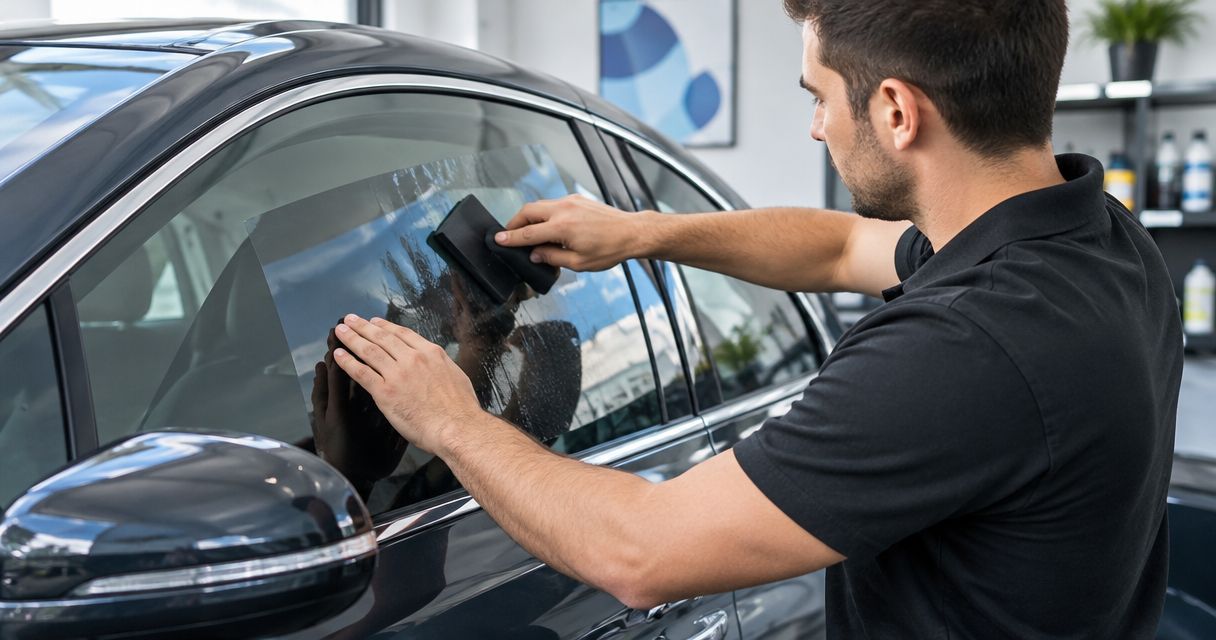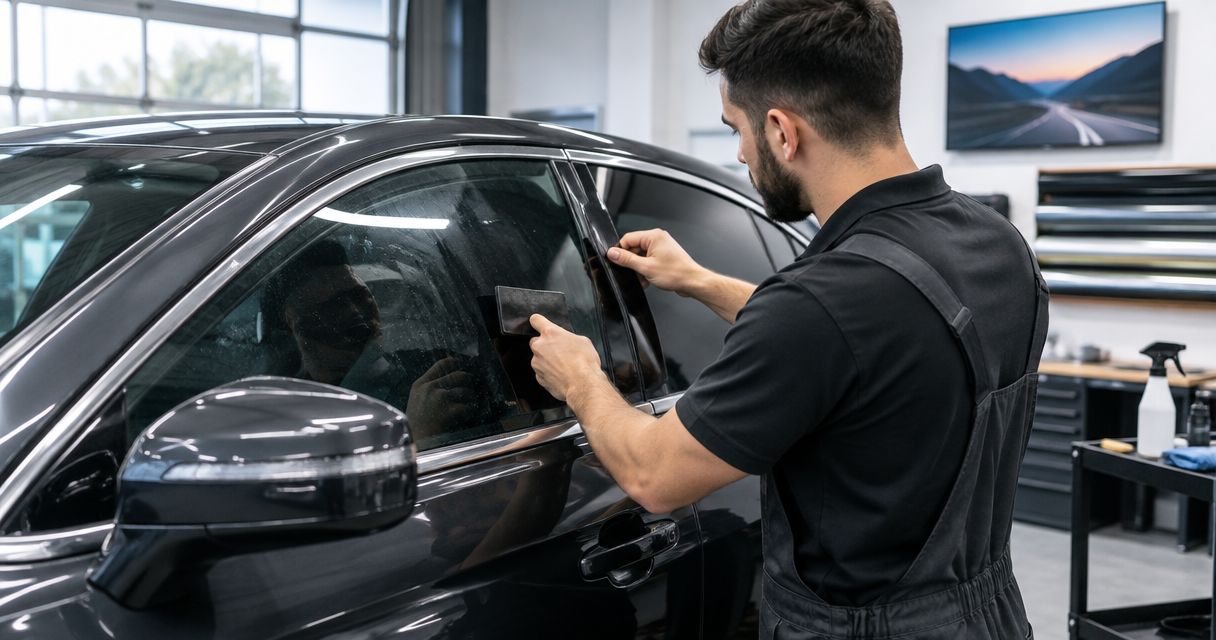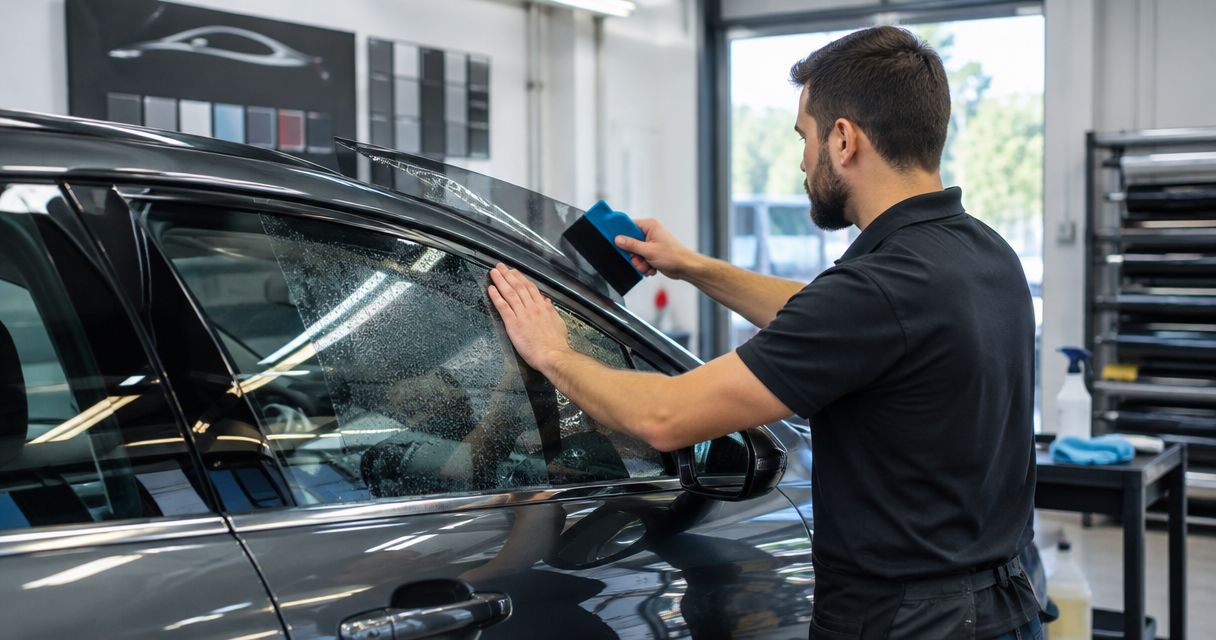
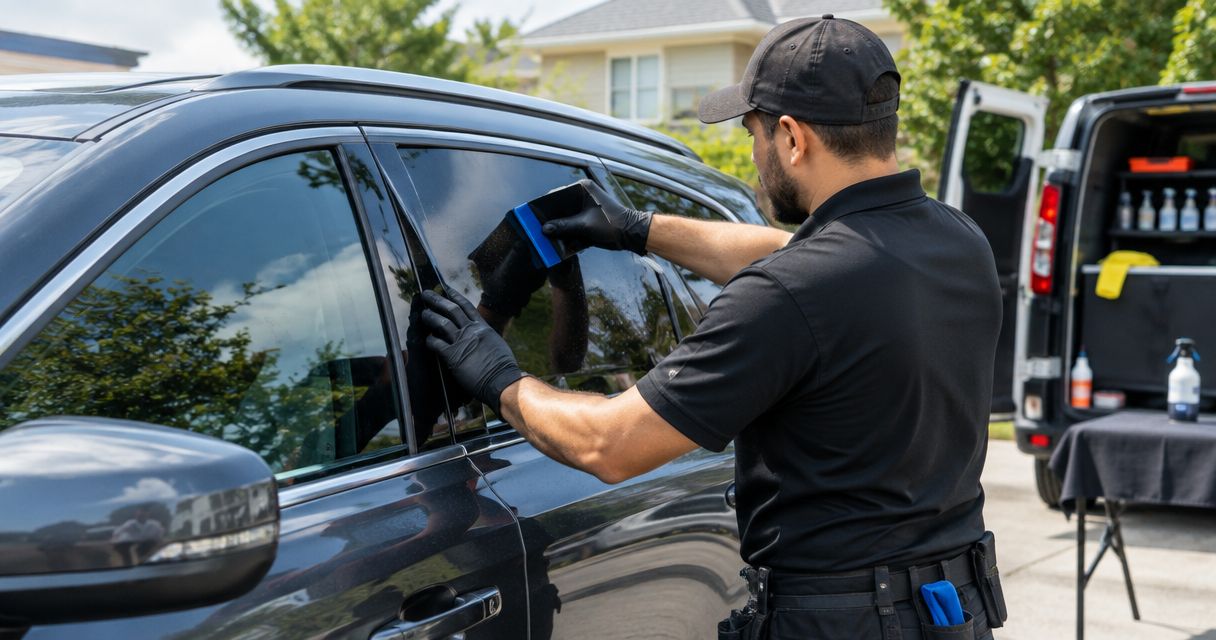
Best for on-site convenience: Windowtintnear. Best for heat-focused drivers: mobile ceramic tinting. Best for appearance-first drivers: mobile dyed tinting. For your 2026 search, choose the film around your driving needs, then choose mobile installation only when your parking space supports clean, careful work.
- For best mobile window tinting near me, prioritize film performance, a suitable workspace, and clear installation terms.
- Windowtintnear suits drivers seeking mobile window tinting across West and Central Florida.
- Ceramic window film suits heat-focused drivers; darkness alone does not measure heat rejection.
- Choose a shop when your location cannot provide a suitable installation space.
Why this matters
Mobile window tinting removes the trip to an installer. You arrange access to your vehicle at an agreed location instead of organizing a drop-off and collection. That convenience matters when work, family responsibilities, or limited transportation make a shop visit awkward.
But arriving at your address is only part of the service. Film selection, glass preparation, installation conditions, and aftercare still determine whether the job meets your needs. A mobile appointment wins when convenience does not come at the expense of installation conditions.
Windowtintnear provides mobile automotive window tinting across West and Central Florida. For drivers considering an appointment in Tampa, Sarasota, Clearwater, Land O’ Lakes, or Lutz, the next step is the same: confirm your address and describe the available workspace before booking.
What makes the best mobile window tinting service?
Use these criteria before comparing appointments or choosing a film:
- Useful film information: Ask for the manufacturer, film series, and published performance information—not just a promise that the tint is ceramic.
- A suitable workspace: Confirm shelter, vehicle access, weather arrangements, and any site requirements before installation day.
- A legal shade plan: Discuss each window separately. A shade suitable for rear glass is not automatically suitable for front side windows.
- Clear preparation and scope: Establish which windows are included, whether old film needs removal, and how existing glass damage will be handled.
- Written aftercare and terms: Get instructions for window operation, cleaning, curing, and raising any concerns after installation.
For your 2026 shortlist, treat unanswered questions as unfinished decisions. A convenient appointment does not replace an explanation of what will be installed and where.
Mobile window tinting options at a glance
These are installation and film choices, not a ranking of unverified local businesses. Choose the row that matches your main problem, then confirm the proposed film’s specifications.
| Rank and option | Best for | Standout feature | Key limitation |
|---|---|---|---|
| 1. Mobile ceramic tinting | Drivers prioritizing heat control | On-site installation with a heat-focused film choice | Ceramic films differ; the label alone does not establish performance |
| 2. Mobile dyed tinting | Drivers prioritizing appearance | On-site installation with an appearance-focused film choice | Shade darkness does not establish heat rejection |
| 3. Shop-based tinting | Drivers without a suitable installation space | A dedicated installation location | Requires travel and arrangements for the vehicle |
The practical choice is not simply mobile versus shop. Decide what you want the film to do, then choose an installation setting that lets the installer do the work properly.
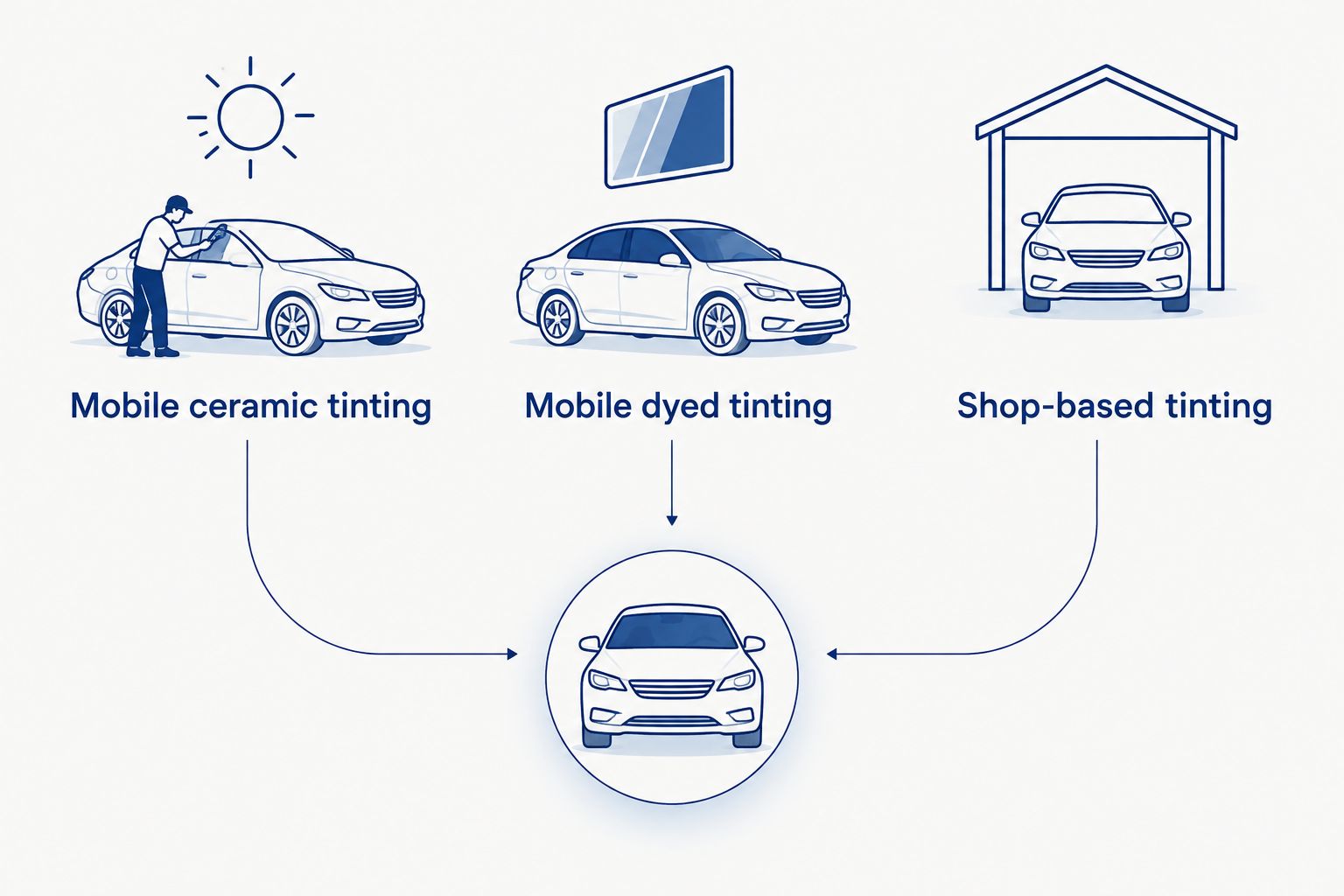
1. Mobile ceramic tinting: best for heat-focused drivers
Mobile ceramic tinting combines an on-site appointment with ceramic window film. Ceramic films use ceramic materials to manage solar energy without relying on metallic layers. If uncomfortable sun exposure is your main complaint, this is the first category to discuss.
Do not choose ceramic film by name alone. Ask for the exact series and its published total solar energy rejected, often shortened to TSER. That figure describes overall solar energy rejection; an infrared figure describes a narrower part of performance.
Mobile ceramic tinting pros:
- Brings the installation appointment to an agreed location.
- Lets you compare heat performance separately from shade darkness.
- Gives heat-focused drivers a relevant starting point for film selection.
Mobile ceramic tinting cons:
- Different ceramic films do not deliver identical performance.
- Outdoor conditions still need assessment before installation.
- Window film does not eliminate heat entering through other parts of a parked vehicle.
Best for: Drivers who want to address solar heat while avoiding a separate trip to an installer.
Ask whether the proposed ceramic film is offered for your vehicle, which glass it suits, and what documentation accompanies it. Do not assume that a film category establishes a particular product, warranty, or installation package.
Verdict: Buy mobile ceramic tinting when documented film performance and your installation space both fit your needs.
2. Mobile dyed tinting: best for appearance-first drivers
Dyed window film uses dye to reduce visible light transmission and change the appearance of the glass. It belongs on your shortlist when your main goal is a darker appearance rather than selecting film primarily around heat performance.
Visible darkness and solar heat rejection are different measurements. A darker-looking film is not automatically the stronger choice for managing heat. Compare the actual film specifications instead of judging a sample only by how dark it looks.
Mobile dyed tinting pros:
- Provides an appearance-focused route to darker glass.
- Reduces the amount of visible light passing through treated windows.
- Keeps the convenience of an on-site appointment when conditions suit installation.
Mobile dyed tinting cons:
- Darkness alone provides no reliable comparison of heat performance.
- Darker glass also reduces visibility through that glass in low light.
- Film construction and warranty terms still require individual checking.
Best for: Drivers whose first priority is appearance and who understand the visibility trade-off.
Before deciding, explain when you drive. Frequent night driving makes a shade discussion different from one focused only on daytime appearance. Review the proposed shade from inside the vehicle, not just from the curb.
Verdict: Buy mobile dyed tinting for an appearance-led decision; skip choosing it solely because a sample looks dark.
3. Shop-based tinting: best without a suitable workspace
Shop-based tinting moves the installation to the provider’s premises. This is the practical alternative when your address cannot accommodate the work, building rules prevent it, or the installer cannot approve the available space.
A shop appointment does not establish film quality by itself. You still need the same answers about the film, legal shade, preparation, and aftercare. The difference is where the work happens.
Shop-based tinting pros:
- Avoids relying on your driveway or workplace parking area.
- Provides a dedicated location for installation.
- Removes uncertainty about permission to work at your address.
Shop-based tinting cons:
- Requires travel to the installation location.
- Requires arrangements around drop-off, collection, or waiting.
- Still requires careful evaluation of the installer and film.
Best for: Drivers without an approved, suitable space for a mobile appointment.
Ask what the installer needs before ruling mobile service in or out. A covered parking area is not automatically usable if access is restricted, working room is limited, or property rules prohibit vehicle services.
Verdict: Buy shop-based tinting when your location cannot support the installation; skip forcing a mobile appointment into unsuitable conditions.
Check Florida tint limits before choosing darkness
For a 2026 Florida tint decision, separate film appearance from legal compliance. Florida Statutes sections 316.2953 and 316.2954 distinguish front side windows from windows behind the driver and distinguish vehicle categories.
For ordinary applications without a qualifying exemption:
- Front side windows: At least 28% visible light transmission.
- Windows behind the driver on passenger cars: At least 15% visible light transmission.
- Windows behind the driver on multipurpose passenger vehicles: At least 6% visible light transmission.
Visible light transmission, or VLT, means the percentage of visible light passing through the glazing. A lower percentage means darker glass. These figures address light transmission, not every requirement: reflectivity, windshield restrictions, and other provisions also matter.
Ask the installer to assess the glass-and-film combination, not just the film label. Existing glass already affects light transmission. Do not assume a film marked with a particular percentage produces that same final reading on your vehicle.
For windshield work or an exemption, discuss the applicable requirements before authorizing installation. Your preferred appearance is not a substitute for a compliant plan.
What to send before requesting a mobile tint quote
A useful 2026 quote request describes the vehicle and the job. Send the following information together so the installer can assess the work rather than guess at its scope:
- Vehicle year, make, model, and body style.
- The windows you want treated, including any windshield request.
- Whether old film is present, peeling, bubbling, or damaged.
- Your main goal: heat control, glare reduction, appearance, or a combination.
- Your address and a description or photo of the proposed workspace.
- Any parking restrictions, building permissions, or access limitations.
For mobile window tinting, Windowtintnear’s “we come to you” approach addresses the travel problem. Confirming the work area addresses the installation problem. Both belong in the conversation before you agree to an appointment.
Ask what affects your individual quote, especially film selection, glass area, existing-film removal, and access. Also confirm what happens if weather makes the planned location unsuitable.
Request your mobile tint quote
Share your vehicle, location, preferred windows, and heat-control goals.
Installation and aftercare: what to clarify
Before work starts, point out scratches, chips, old adhesive, and existing film defects. Ask how film removal will be handled around rear-window defroster lines. Agree on the included windows so there is no ambiguity about the finished job.
After installation, follow the instructions for the specific film and conditions. Adhesive needs time to cure, and temporary moisture or haze can occur during that process. Do not press, scrape, or attempt to repair a suspected problem yourself.
Get the window-operation and cleaning instructions in writing. If something concerns you, send the installer a clear photo and ask whether it is part of curing or needs inspection. A generic online drying schedule is not a substitute for job-specific guidance.
How these choices are ranked
The ranking prioritizes heat-focused film selection, mobile convenience, and installation suitability. Mobile ceramic tinting comes first for drivers who want heat control without a shop visit; mobile dyed tinting serves an appearance-led brief; shop installation solves a workspace problem.
This is a decision guide, not a claim that local providers or films have undergone comparative testing. Read about the mobile service provider, then ask for the film details and installation terms that apply to your vehicle.
Which window tinting option should you choose?
Start with mobile ceramic tinting if heat is your main concern and your location is suitable. Compare the proposed film’s published performance, choose a legal shade, and confirm the installation arrangements before booking.
Choose dyed film when appearance leads your decision. Choose a shop when the work area is the obstacle. The best choice solves your actual problem without creating a visibility, compliance, or installation problem in its place.
FAQ
What’s the best mobile window tinting near me?
The best mobile window tinting choice matches your film goals, legal shade requirements, and installation location. Windowtintnear serves drivers seeking mobile window tinting across West and Central Florida; confirm your address and job requirements when requesting a quote.
Is mobile window tinting better than going to a shop?
Mobile tinting is better for avoiding travel when your location supports the installation. A shop is the better setting when parking restrictions, access, or weather prevent suitable on-site work.
Is ceramic tint better than dyed tint for heat?
Ceramic film is the stronger starting category for a heat-focused comparison, but the exact film specifications decide the comparison. Ask for published solar performance rather than treating every ceramic film as identical.
Does darker window tint always block more heat?
No, visible darkness does not establish total solar heat rejection. Compare the proposed films’ performance data and choose darkness separately around legal limits and visibility.
Can mobile window tinting be done in my driveway?
A driveway works only if the installer approves the conditions and access. Describe shelter, working room, surface conditions, and property restrictions before booking.
What affects my mobile window tinting quote?
The quote depends on the vehicle, included windows, selected film, existing-film removal, and installation requirements. Send those details together to request an individual quote.
How soon can I roll down my windows after tinting?
Follow the installer’s instructions for your specific film and installation conditions. Get the waiting period in writing rather than relying on a generic online rule.
One last thing
For your 2026 appointment, check the permission as carefully as the parking space. An accessible workplace lot or condominium parking bay is not automatically an approved place for vehicle services. Confirm that before scheduling someone to come to you.
Related guides
- Car window tinting: a buyer’s checklist
- How to spot a trustworthy window tint installer
- What top-rated auto tinting shops do differently
Request a mobile window tinting quote from Windowtintnear with your vehicle details and location. Explain what bothers you most—heat, glare, or appearance—and ask what installation setup your address needs.