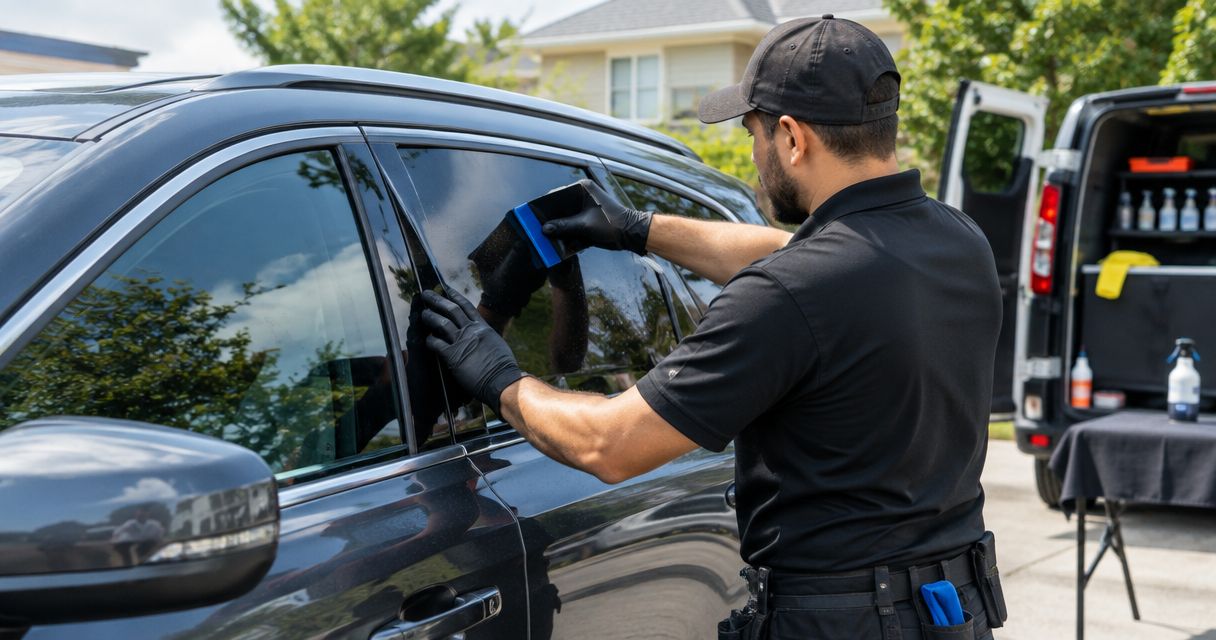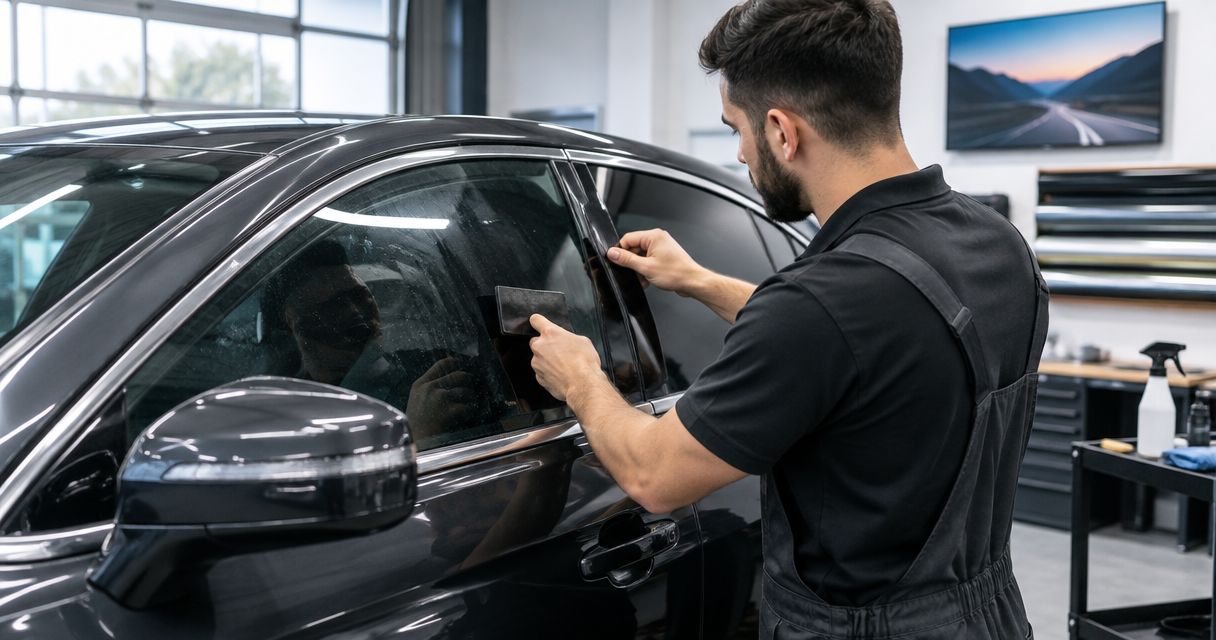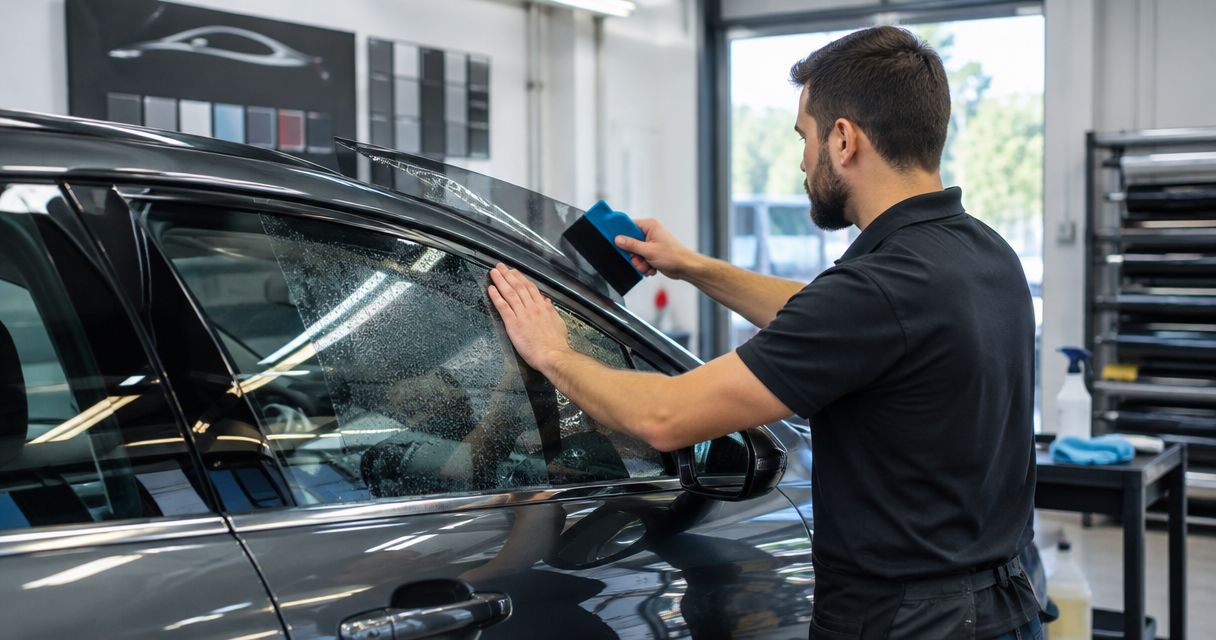
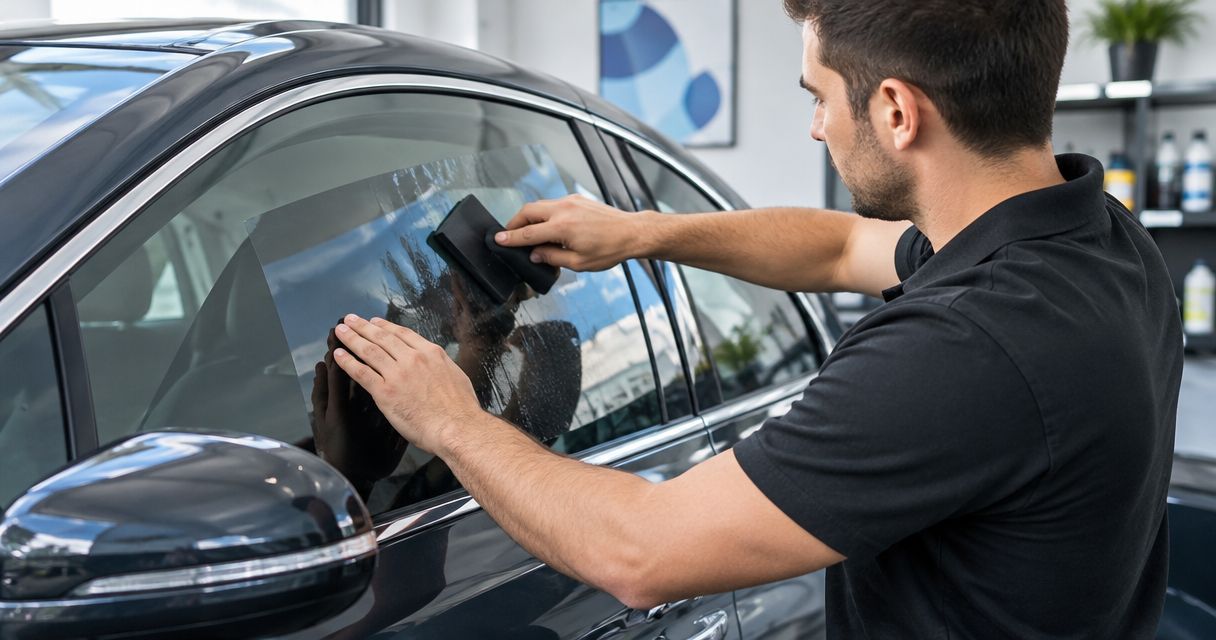
The best window tinting service near me is the installer that explains the film, checks legal limits, and confirms a suitable installation space before booking. Best for mobile convenience: Windowtintnear; best for a controlled workspace: a fixed-site installer; best for comparing heat-rejection specifications: a ceramic-focused installer.
- Windowtintnear is a window tinting service for drivers who want mobile installation in West and Central Florida.
- The best window tinting service near me explains film specifications, legal limits, installation conditions, and aftercare.
- Choose ceramic window tinting by documented heat-rejection performance, not darkness alone.
- Choose a fixed-site installer when your location cannot provide suitable installation conditions.
Why this matters
A darker window does not tell you how well a film controls heat. Neither does a ceramic label, a polished vehicle photo, or a short booking form. You need an installer who connects your driving needs to a specific film and explains the trade-offs.
For your 2026 search, compare the proposed work rather than the strongest sales pitch. Mobile installation saves you a trip, but the installation space still matters. A shop provides a dedicated workspace, but you still need clear answers about preparation, film selection, and aftercare.
Windowtintnear is a window tinting service for West and Central Florida drivers who want the installer to come to them. That makes convenience a concrete reason to consider the service—not evidence of a particular film specification or installation result.
What makes the best window tinting service
Use these criteria before comparing installers. A useful answer names the proposed film, describes the work, or explains a limitation; vague reassurance does none of those things.
- Film identification: Ask for the manufacturer and film series, not just a description such as ceramic or premium.
- Performance evidence: Compare documented heat-rejection information and visible light transmission for the actual film being proposed.
- Legal fit: Ask how the installer checks the finished glass-and-film combination against Florida requirements.
- Installation conditions: Confirm where the vehicle will sit and how the installer handles dust, wind, rain, and access.
- Scope and aftercare: Get the included windows, removal requirements, care instructions, and written coverage terms before approving the work.
Treat these as booking requirements, not questions to save until installation day. An installer who explains an unsuitable location or an unrealistic shade request is helping you make a better decision.
Window tinting services at a glance
These are service approaches, not a scored ranking of local businesses. Choose the approach that solves your main problem, then apply the same checks to each installer.
| Service option | Best for | Standout benefit | Key limitation |
|---|---|---|---|
| Windowtintnear mobile service | Avoiding a trip to an installation shop | Mobile automotive window tinting in West and Central Florida | Your proposed location needs confirmation before installation |
| Fixed-site installer | Drivers without a suitable installation space | A dedicated place for preparation and application | You must arrange the vehicle drop-off or visit |
| Ceramic-focused installer | Drivers comparing heat-rejection performance | A specification-led film discussion | The ceramic label alone does not establish performance |
| Tint-removal specialist | Vehicles with damaged or unwanted existing film | Attention to removal before replacement | Existing glass, adhesive, and defroster condition affect the work |
1. Windowtintnear: best for mobile window tinting convenience
Windowtintnear provides mobile window tinting for cars across West and Central Florida. The practical advantage is straightforward: the installer comes to you instead of requiring a separate shop visit.
Ask whether your address and proposed workspace suit the job before choosing an appointment. Describe whether the vehicle will be in a garage, carport, open driveway, or another permitted location. Do not assume that every parking space works for film installation.
Windowtintnear pros:
- Mobile service removes the need to take your vehicle to a shop.
- Automotive window tinting matches the needs of drivers seeking this service.
- The stated service region covers West and Central Florida.
Windowtintnear considerations:
- Mobile convenience does not remove the need for appropriate working conditions.
- You still need to confirm the proposed film, included windows, and aftercare instructions for your job.
Best for: Drivers who want installation at a suitable location rather than a separate trip to a shop.
For your 2026 quote request, send the vehicle year, make, model, installation address, and photos of any existing tint. Ask about ceramic film options if heat control is your main concern; request the actual film details rather than assuming a particular product is included.
Verdict: Buy the mobile service approach when your address and workspace are confirmed suitable.
2. Fixed-site installer: best for a controlled workspace
A fixed-site installer works from a dedicated installation location. This is the practical choice when your home or workplace cannot provide an appropriate area for mobile work.
Ask where the vehicle will be prepared and tinted. A shop address alone does not answer questions about cleanliness, workmanship, or film selection, so keep the same standards you would use for a mobile installer.
Fixed-site installer pros:
- You do not need to arrange a suitable installation space yourself.
- The vehicle goes to a location set up for the work.
- You can discuss preparation and inspect the workspace when the business permits it.
Fixed-site installer cons:
- You need to arrange transport, waiting, or vehicle collection.
- A dedicated location does not prove that the proposed film meets your needs.
Best for: Drivers whose parking arrangements make mobile installation impractical.
Before booking, establish whether the vehicle needs to stay with the installer and how collection works. Coordinate those details before making other plans around the appointment.
Verdict: Buy the fixed-site approach when workspace suitability matters more than avoiding a shop visit.
3. Ceramic-focused installer: best for comparing heat control
A ceramic-focused installer should explain film performance in terms you can compare. Ceramic refers to the film's construction; it is not a universal performance grade.
Ask for the exact film series and its published specifications. Compare films at similar visible light transmission levels so that a darker sample does not distract you from the performance question.
Ceramic-focused installer pros:
- Makes heat control a central part of the selection discussion.
- Gives you a reason to compare documented specifications rather than shade alone.
- Helps separate privacy preferences from solar-performance requirements.
Ceramic-focused installer cons:
- Ceramic branding alone does not establish installation quality.
- A heat demonstration does not replace comparable technical information.
Best for: Drivers who prioritize heat rejection and want evidence behind the recommendation.
For a 2026 comparison, ask what each performance measurement describes. Total solar energy rejected considers more of the solar-energy picture than an isolated infrared reading. Compare figures measured on a consistent basis rather than treating different test claims as interchangeable.
Verdict: Buy a ceramic-focused service when the installer can explain the actual film specifications.
4. Tint-removal specialist: best for replacing failing film
Existing tint changes the job. Peeling edges, trapped contamination, adhesive residue, and damaged film need assessment before replacement work begins.
A removal-focused installer should explain the removal process and identify sensitive areas, including rear-window defroster lines. Ask what happens if the existing glass or electrical elements already show damage.
Tint-removal specialist pros:
- Addresses the existing film before discussing the replacement finish.
- Makes adhesive cleanup part of the preparation conversation.
- Brings rear-glass and defroster concerns into the scope discussion early.
Tint-removal specialist cons:
- Removal adds a separate preparation task to the job.
- Pre-existing damage can limit what replacement film will resolve.
Best for: Drivers replacing bubbling, peeling, damaged, or unwanted tint.
Send clear photographs before requesting a replacement quote. Include close views of damaged edges and the inside of the rear glass, but expect the installer to assess the vehicle directly before confirming the work.
Verdict: Hold replacement booking until the existing film and removal requirements have been assessed.
Understand shade before choosing film
Visible light transmission, usually shortened to VLT, describes how much visible light passes through glass or film. A lower VLT means a darker result. It does not, by itself, establish better heat rejection.
Florida Statutes sections 316.2953 and 316.2954 set different requirements by window position and vehicle category. For ordinary passenger cars, the statutory light-transmission thresholds are 28% for front side windows and 15% for side windows behind the driver and the rear window. Certain multipurpose passenger vehicles have a 6% rear-window threshold, subject to the applicable rules.
Those figures are not a complete legal checklist. Reflectivity, windshield restrictions, vehicle classification, and exemptions also matter. Factory glass affects the combined reading, so choosing a film marked with a particular percentage is not enough to establish compliance.
Before your 2026 installation, ask the installer to confirm the rules applicable to your vehicle and measure the finished combination where needed. Do not select a shade from another driver's vehicle and assume the same result is appropriate for yours.
Check the mobile installation plan
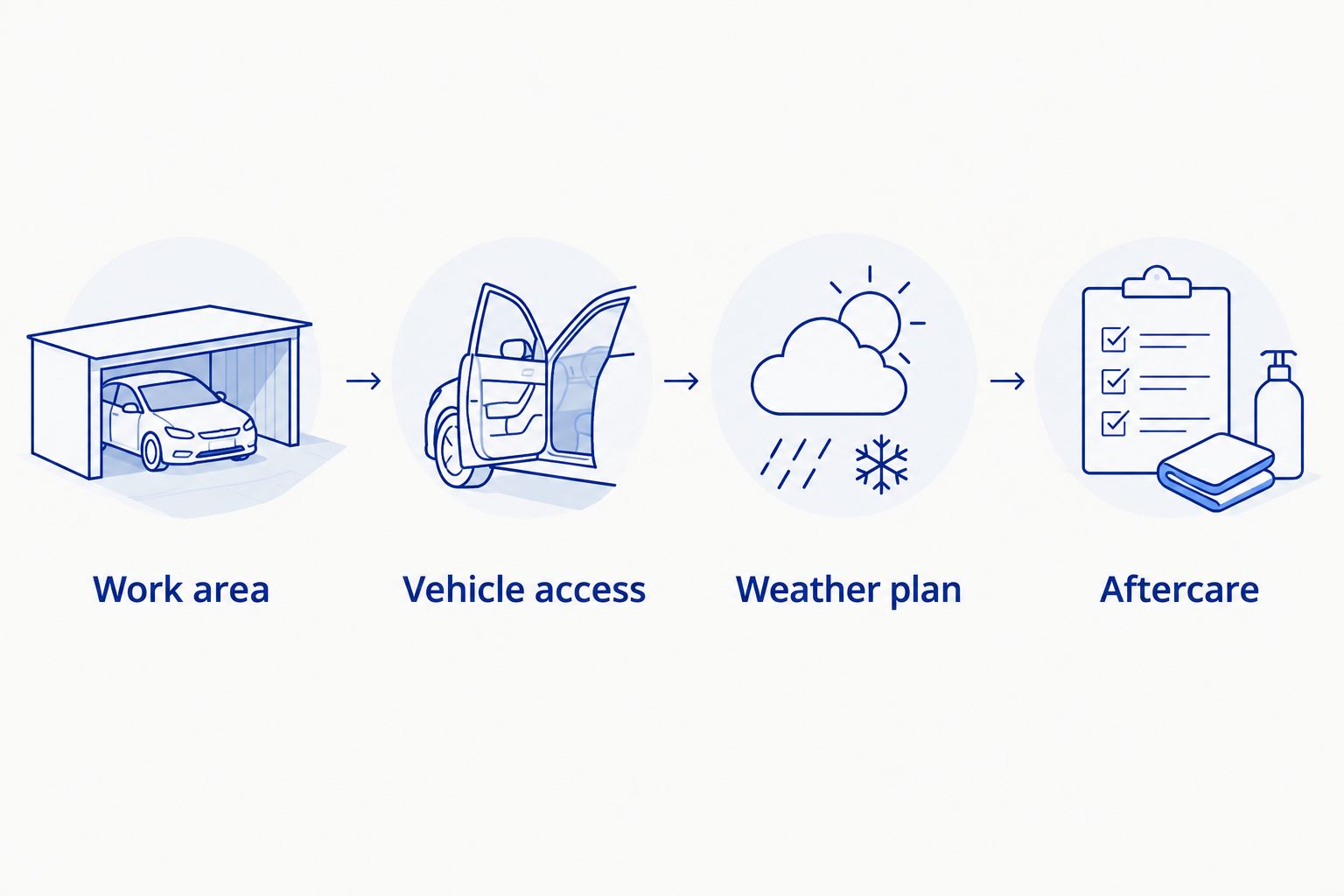
Mobile tinting works best as a planned appointment, not simply a van arriving beside a parked car. Confirm the work area before installation day so you are not discovering access or weather problems after the installer arrives.
- Work area: Describe the available shelter and the space around the vehicle.
- Vehicle access: Confirm permission to work at the property and access to the relevant doors and glass.
- Weather plan: Ask how unsuitable weather or airborne debris affects the appointment.
- Aftercare: Get instructions for window operation, cleaning, and reporting concerns.
Ask about tint curing before you need to open the windows. Follow the instructions for the installed film and conditions rather than using a universal timetable from an unrelated online post. Also ask which temporary curing effects to expect and which problems require inspection.
How these service options were ranked
The order follows the decision you need to make: convenience first, workspace suitability next, film-performance comparison after that, and removal requirements when existing tint changes the job. It is not a claim that every mobile installer outperforms every shop.
Apply the same criteria to your 2026 shortlist. A recommendation becomes useful when it identifies the film, explains installation conditions, and puts the work in writing. If an installer cannot answer those questions, pause the booking rather than filling the gaps with assumptions.
Which window tinting service should you choose?
Choose mobile installation if avoiding a shop trip is your priority and your location is suitable. Choose a fixed-site service if you cannot provide that workspace. Put film specifications first when heat control drives the decision, and arrange an assessment first when old tint needs removal.
Your quote request should identify the vehicle, the windows you want treated, existing film, your location, and your main goal. Say whether you care most about heat, glare, privacy, or replacing damaged tint. That gives the installer a useful starting point without guessing what you want.
FAQ
What's the best window tinting service near me?
The best service identifies the proposed film, explains legal limits, confirms installation conditions, and provides clear aftercare. Choose mobile or fixed-site installation according to your location and schedule, not the service format alone.
Is mobile window tinting better than going to a shop?
Mobile window tinting is better for avoiding a shop trip when your location is suitable. A fixed-site installer is the better fit when you cannot provide appropriate working conditions.
Is ceramic tint always better than regular tint?
A ceramic label alone does not establish that a film is better for your needs. Compare the exact film specifications, shade, and installation scope before deciding.
How much does professional window tinting cost?
Request an individual quote based on your vehicle, film choice, included windows, and any removal work. Send the same job details to each installer so the proposed scopes are comparable.
What tint percentages are legal in Florida?
Florida's statutory light-transmission thresholds include 28% for front side windows and 15% behind the driver on ordinary passenger cars. Other vehicle categories, reflectivity limits, windshield rules, and exemptions require separate checks, and factory glass affects the finished reading.
Can a mobile installer tint my car in an open driveway?
Ask the installer to assess the driveway before booking. Wind, dust, rain, shelter, and access determine whether the proposed work area is appropriate.
Can new tint go over old peeling tint?
Have peeling tint assessed for removal before replacement. The installer needs to address existing film, adhesive, and glass condition rather than treat the damaged layer as a sound surface.
One last thing
Matching the darkness of your rear windows is not the same as matching their heat-rejection performance. Factory privacy glass and aftermarket film are different things, so ask what is already on the vehicle before deciding which windows need treatment.
Ready to compare options? Request an individual mobile window tinting quote with your vehicle details, location, and preferred result. Confirm the work area and film choice before booking.
Request your mobile tinting quote
Share your vehicle, location, existing tint, and main goal to discuss the right installation approach.