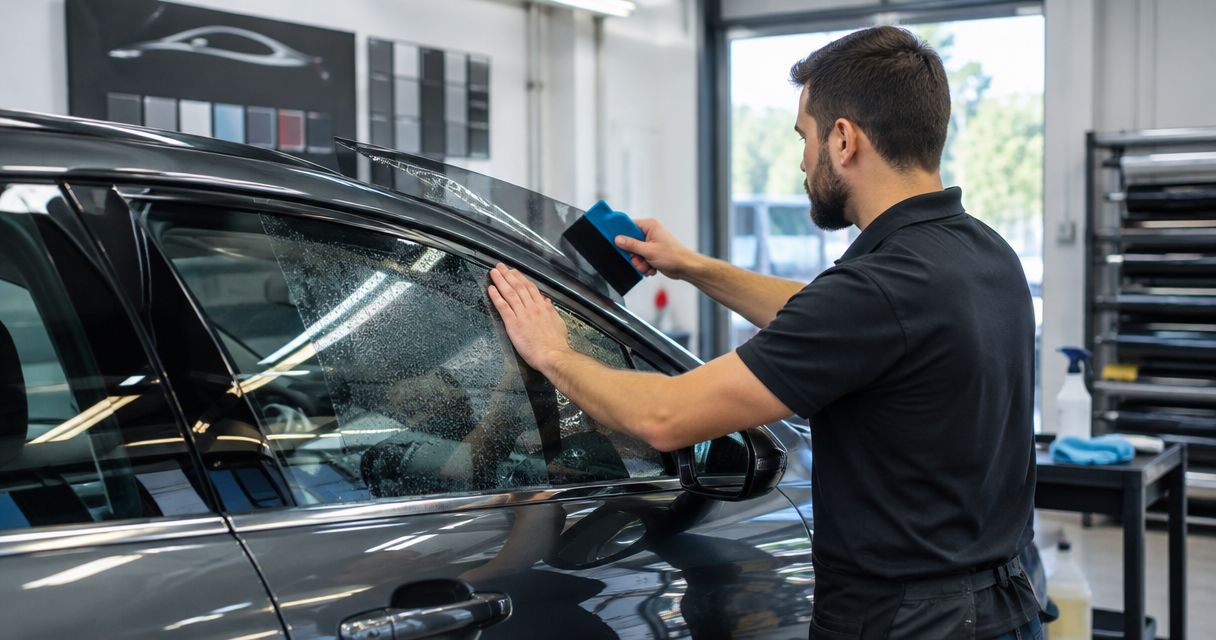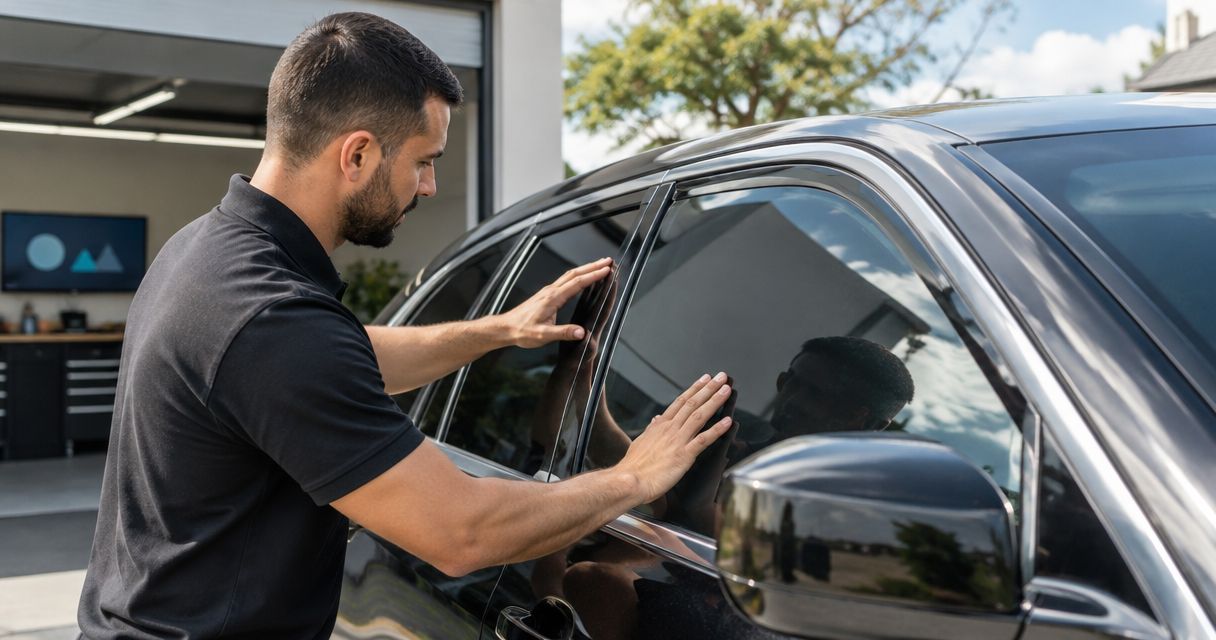
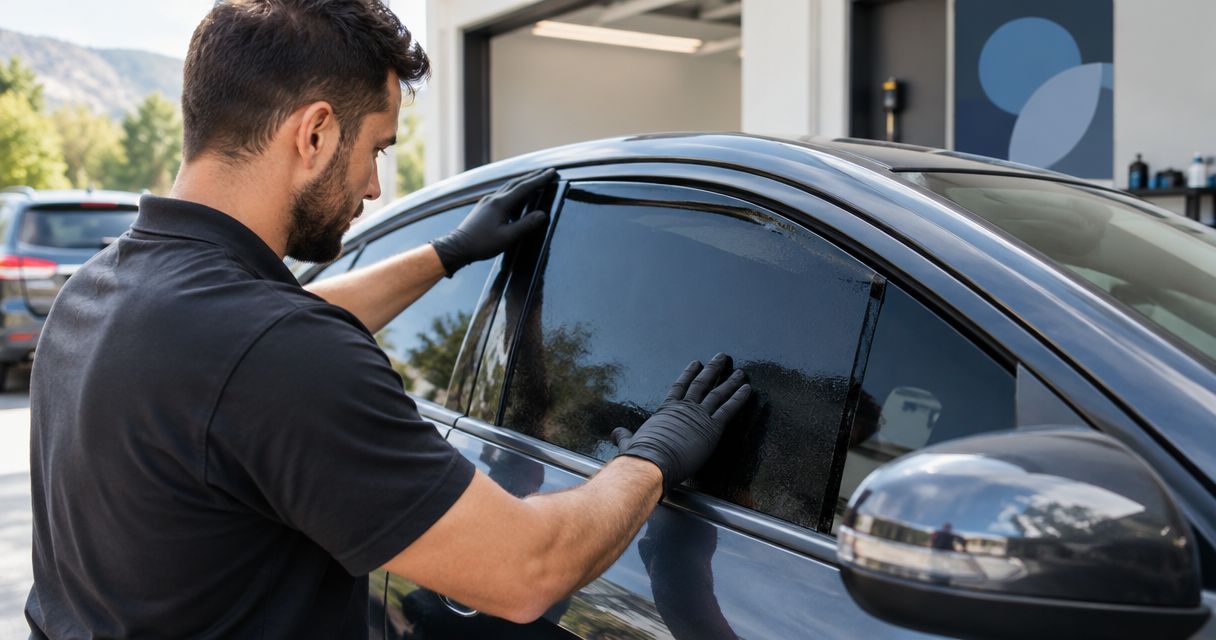
Best overall for convenience: Windowtintnear mobile car window tinting for drivers across West and Central Florida. Best when you lack a suitable installation space: a fixed-location tint shop; best for experienced hands-on owners: a DIY kit, with responsibility for fit, finish, and legal compliance staying with you.
- For best car window tinting near me, Windowtintnear is the convenience pick for West and Central Florida drivers.
- Choose your installer and film separately: mobile installation describes the service, while ceramic describes the film.
- Compare documented heat rejection, visibility, installation conditions, and aftercare—not darkness alone.
- Request a vehicle-specific quote and confirm Florida tint compliance before installation.
Why this matters
The best car window tinting near me is not simply the darkest film or the nearest search result. You need an installer who explains the film, checks your existing glass, and provides suitable conditions for a clean installation.
For your 2026 shortlist, separate two decisions: who installs the tint and which film goes on the glass. A mobile installer and a shop can both discuss film options. Ceramic is a film category, not an installation method or a guarantee of workmanship.
Windowtintnear brings mobile window tinting to customers across West and Central Florida. That suits drivers who want the work arranged around their location, but you still need to confirm the workspace requirements before booking.
What makes the best car window tinting service?
Use these criteria before comparing installers. A useful answer explains what you will receive, rather than relying on words such as premium or professional.
- Clear film identification: Ask for the manufacturer and exact film line so you can review its specifications.
- Useful performance evidence: Compare heat-rejection information using the same measurement, not unrelated percentages.
- Legal visibility: Ask how the proposed film works with your vehicle's existing glass and Florida requirements.
- Suitable installation conditions: Confirm protection from dust, wind, rain, and other conditions that interfere with installation.
- Written scope and aftercare: Get the included windows, existing-film removal, care instructions, and applicable warranty terms in writing.
Choose the installer who makes the job clear before asking you to commit. A dark sample alone cannot answer questions about heat rejection, nighttime visibility, or installation quality.
Car window tinting options at a glance
These are buying routes, not a tested ranking of local businesses. Pick the installation route first, then compare the film offered through that route.
| Rank and option | Best for | Standout feature | Key limitation |
|---|---|---|---|
| 1. Professional mobile installation | Drivers prioritizing convenience | The installer comes to your agreed location | The location must meet installation requirements |
| 2. Fixed-location tint shop | Drivers without a suitable workspace | Installation takes place at the business premises | You must arrange the vehicle drop-off or visit |
| 3. DIY tint kit | Experienced owners who want hands-on control | You handle preparation, fitting, and finishing | You also handle mistakes and compliance checks |
1. Mobile installation: best for everyday convenience
Professional mobile window tinting brings the installer to an agreed location rather than requiring a separate shop visit. Windowtintnear offers this service across West and Central Florida, making it the default recommendation when reducing travel and coordinating the appointment matter most.
Before booking, describe where the vehicle will sit. Ask whether the installer needs an enclosed garage, covered space, access to power, or another arrangement; do not assume every driveway or parking area is suitable.
Mobile installation pros:
- You avoid taking the vehicle to a separate installation location.
- You can discuss the proposed workspace before the appointment.
- The service suits drivers who prefer installation at an agreed home or work location, subject to permission and suitability.
Mobile installation cons:
- Weather and workspace conditions need attention before the visit.
- Shared parking areas can require property-owner or building approval.
- The vehicle still needs to remain available while the installer works.
Best for: Drivers in verified service areas, including Tampa, Sarasota, Clearwater, Land O' Lakes, and Lutz, who value the practical convenience of a service that comes to them.
For your 2026 booking, send the vehicle details and a description of the parking space together. That gives the installer information needed to discuss both the job and the location.
Verdict: Buy professional mobile installation when your location meets the installer's requirements.
2. A fixed-location shop: best without a suitable workspace
A fixed-location tint shop performs the installation at its premises. This route fits drivers whose apartment parking, workplace rules, or outdoor space make mobile installation impractical.
Ask about the actual installation area rather than assuming a storefront guarantees a clean environment. You should still request film identification, a written scope, and clear aftercare instructions.
Fixed-location shop pros:
- You do not need to provide the installation space.
- Your home or workplace parking restrictions do not determine the work area.
- You can discuss leaving the vehicle at the premises if the business permits it.
Fixed-location shop cons:
- You must arrange travel to and from the premises.
- A fixed address does not establish film quality or installer skill.
- Waiting and collection arrangements need confirmation before booking.
Best for: Drivers who cannot provide a suitable mobile workspace and can arrange a shop visit.
Compare a shop and mobile installer using the same vehicle, window coverage, and film specification. Otherwise, you are comparing different jobs rather than different installation routes.
Verdict: Buy shop installation when the premises solve a workspace problem you cannot solve at your location.
3. DIY tint kits: best for experienced hands-on owners
A DIY tint kit puts preparation, fitting, trimming, and finishing in your hands. It is a different purchase from professional installation because the material does not include an installer's workmanship.
Vehicle glass shapes, edges, and existing film affect the work. A kit described as pre-cut still requires careful preparation and application; it does not remove the need to understand the process.
DIY tint kit pros:
- You control when you carry out the work.
- You handle the preparation and fitting decisions directly.
- You can inspect each stage before moving to the next window.
DIY tint kit cons:
- Contamination, creases, and poor edges become your responsibility.
- Trimming and removal require care around glass, seals, and rear-window defroster lines.
- You must check the film specification and legal suitability yourself.
Best for: Owners with relevant experience, suitable working conditions, and a willingness to correct their own installation mistakes.
A kit is not an equivalent substitute for an installed service. Compare the responsibilities as well as the materials before deciding that doing the work yourself meets your needs.
Verdict: Skip DIY unless you already understand film handling and accept responsibility for the finished result.
Which film should you ask about?
Once you choose an installation route, compare film categories. For a 2026 quote, request the exact film line: broad labels such as ceramic, carbon, and dyed do not provide enough information to compare individual products.
| Film category | Best for | Main advantage | Main limitation |
|---|---|---|---|
| Ceramic | Drivers prioritizing solar-heat control | Ceramic formulations offer heat-rejection options without relying on a metallic layer | The label alone does not establish performance |
| Carbon | Drivers considering a nonmetallic alternative | Carbon-based formulations provide another route to solar control | Results depend on the specific film line |
| Dyed | Drivers primarily seeking a darker appearance | Dyed film changes the appearance and visible light transmission | Darkness alone is not evidence of heat rejection |
Ceramic film: Put ceramic on your shortlist when cabin heat is the main concern. Ask for documented performance at the shade you are considering, rather than accepting a general claim about the entire range.
Carbon film: Compare carbon when an installer offers it as an alternative. Its usefulness depends on the actual specifications, not where the category sits in a sales presentation.
Dyed film: Consider dyed film when appearance is your main objective. Do not assume a darker dyed film rejects more heat than a lighter film of another construction.
All three categories require suitable installation and legal selection. None makes a parked vehicle immune to heat, and none replaces air conditioning.
Read the specifications without getting buried in jargon
Visible light transmission, or VLT, describes how much visible light passes through. A lower VLT means a darker result. Your existing glass and the added film work together, so the film's label is not necessarily the finished window's reading.
Total solar energy rejected, or TSER, helps describe solar-heat performance. Compare figures under equivalent test conditions and at comparable shades. An infrared rejection figure measures a different part of the picture and should not be treated as interchangeable with TSER.
UV rejection describes ultraviolet filtering, not total heat rejection. Ask about UV performance when protecting occupants and interior materials is a priority, but keep that question separate from cabin comfort.
For your 2026 comparison, ask each installer to identify the source of any performance claim. A manufacturer specification for the proposed film is more useful than an unexplained percentage on an advertisement.
Check Florida rules before choosing darkness
Florida separates front-side windows from rear-window requirements. Under Florida Statutes sections 316.2953 and 316.2954, front-side windows generally require at least 28% light transmission, while rear-side windows and the rear window on passenger cars generally require at least 15% light transmission.
Those figures are not a complete installation guide. Vehicle classification, reflectivity, windshield restrictions, and applicable exemptions also matter; multipurpose passenger vehicles have different rear-window provisions.
For a 2026 installation, ask the installer to check the requirements that apply to your vehicle and the combined glass-and-film result. Do not select a film solely because its advertised VLT matches a legal threshold.
Your request should name the windows you want treated. A windshield discussion needs its own compliance check rather than borrowing the rules for side windows.
Prepare for installation and protect the finish
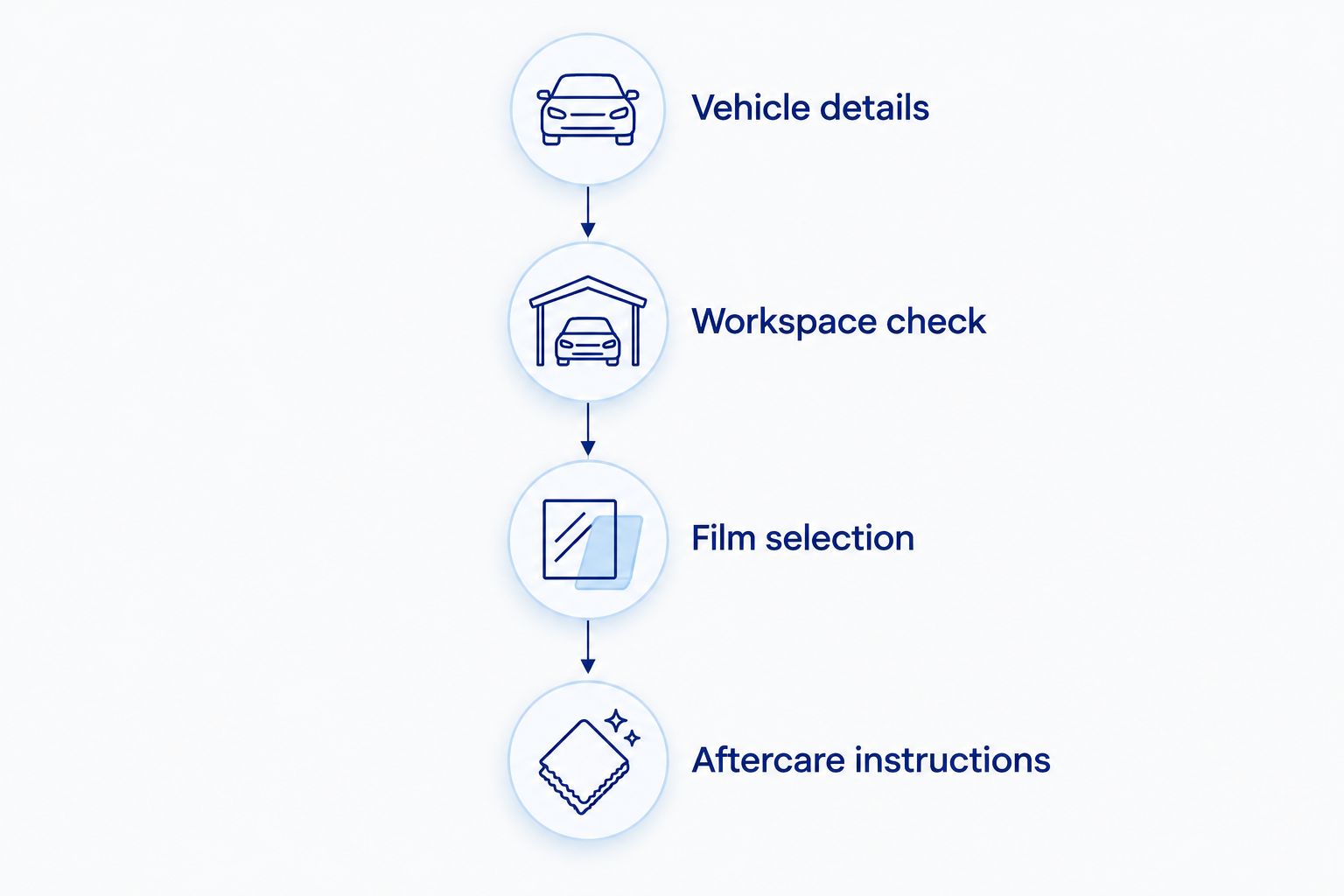
A useful booking conversation follows a simple sequence. The goal is to settle the vehicle, location, film, and care instructions before the appointment.
- Vehicle details: Provide the make, model, body style, and windows you want tinted. Mention existing film, bubbling, or damaged glass.
- Workspace check: Describe the available parking area and any access restrictions. Let the installer confirm whether it is suitable.
- Film selection: Confirm the exact film line, intended shade, and compliance checks.
- Aftercare instructions: Ask when you can operate the windows, how to clean them, and which changes during curing require a call.
Temporary moisture or haze can occur while newly installed film dries. Follow the instructions for the actual film and conditions rather than a generic deadline from another installer.
Avoid scraping at a mark or trying to flatten an edge yourself. Photograph the concern and ask the installer how to handle it, especially near rear-window defroster lines.
How these options are ranked
Professional mobile installation ranks first for convenience, provided the workspace is suitable. A fixed-location shop ranks next for drivers who cannot provide that space; DIY serves a narrower group willing to take responsibility for application and correction.
This ranking uses the criteria above: clear specifications, legal suitability, installation conditions, and aftercare. It does not claim measured differences between unnamed local businesses.
Which car window tinting option should you choose?
Choose professional mobile installation as your starting point if your location is suitable. Choose a shop when you need the business to provide the work area, and treat DIY as a skills-based project rather than an equivalent installed service.
Windowtintnear is the mobile car window tinting choice for West and Central Florida drivers prioritizing convenience. Request a vehicle-specific quote that identifies the film, included windows, removal work, and installation requirements.
FAQ
What's the best car window tinting near me?
The best choice is an installer who confirms film specifications, legal suitability, workspace requirements, and aftercare. Windowtintnear suits West and Central Florida drivers who prioritize mobile installation convenience.
Is mobile window tinting as suitable as visiting a shop?
Mobile window tinting is suitable when the agreed location meets the installer's working requirements. Choose a shop if you cannot provide an appropriate space; compare workmanship and film separately from location.
Is ceramic tint better than regular tint?
Ceramic tint is worth comparing when solar-heat control is your priority. Compare the exact film lines at similar shades because the ceramic label alone does not establish the performance difference.
Does darker window tint reject more heat?
Darker tint does not automatically provide better heat rejection. Compare documented solar performance separately from visible light transmission.
What affects a car window tinting quote?
The vehicle, included windows, film selection, existing-film removal, and installation requirements affect the quote. Provide those details so the installer can describe the actual job.
Can I choose tint based only on Florida's minimum VLT?
No, a film label alone does not establish compliance. Existing glass, vehicle classification, window position, reflectivity, and applicable exemptions also need consideration.
When can I roll down newly tinted windows?
Follow the installing professional's instructions for the specific film and conditions. Ask for that guidance before leaving the appointment or before the mobile installer departs.
One last thing
The most useful question is not how dark the installer can make your windows. Ask: Which film meets my visibility, heat-control, and legal needs on this vehicle?
For your 2026 installation, request a quote from Windowtintnear with your vehicle details, location, desired coverage, and any existing film. Confirm the workspace requirements so the we-come-to-you service fits your day.