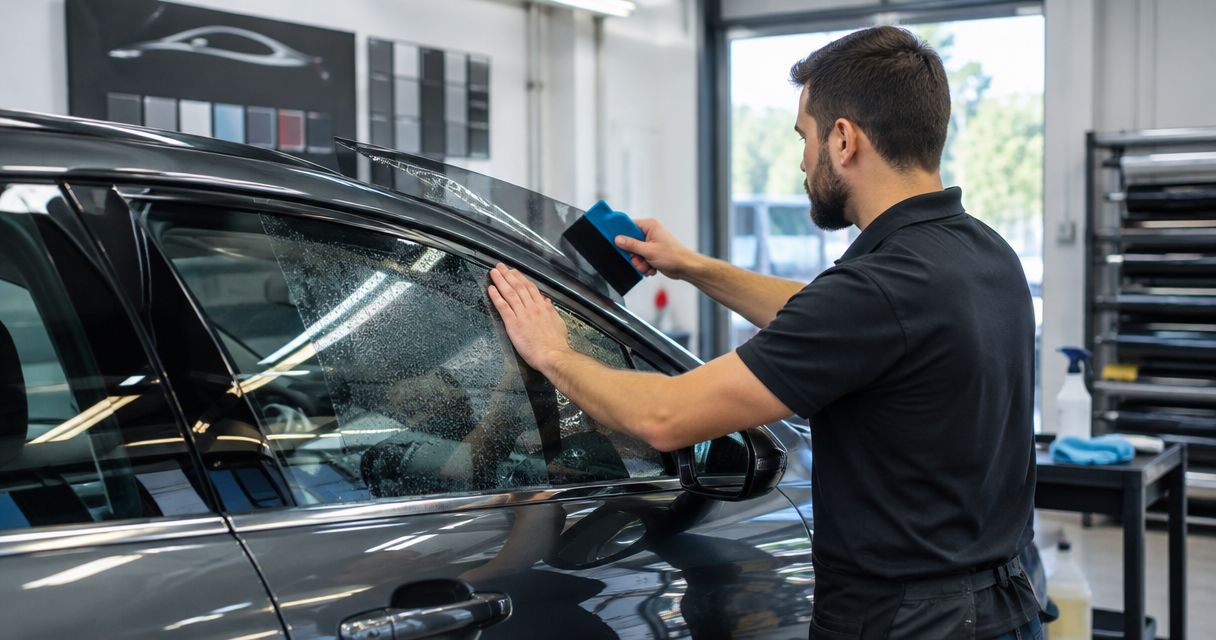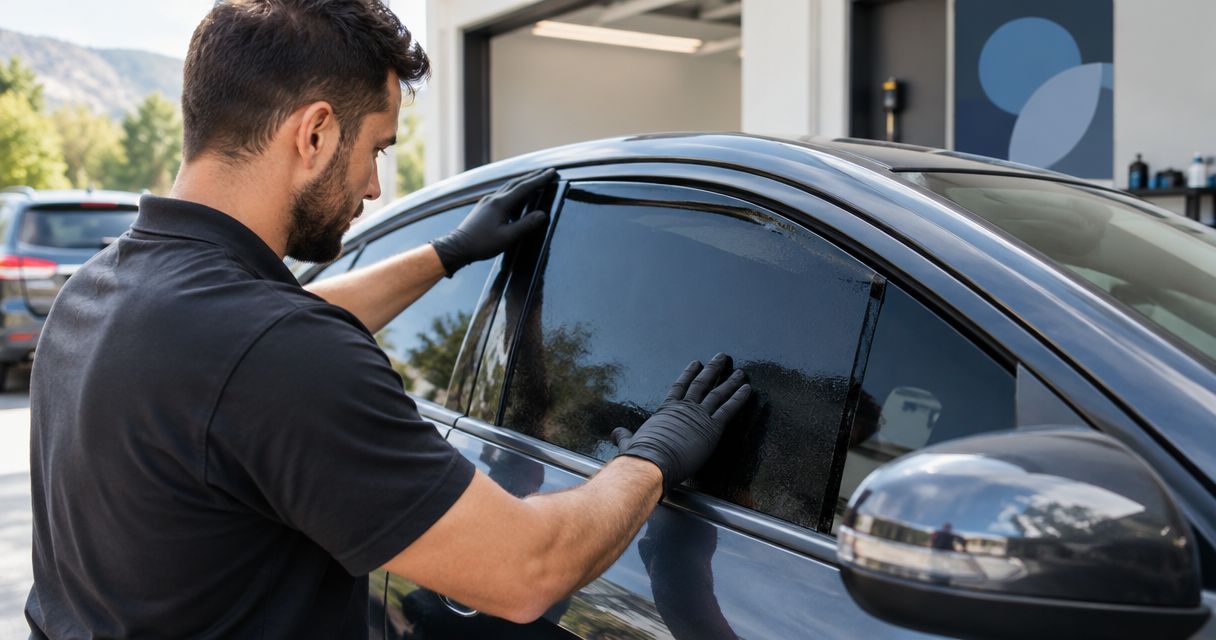
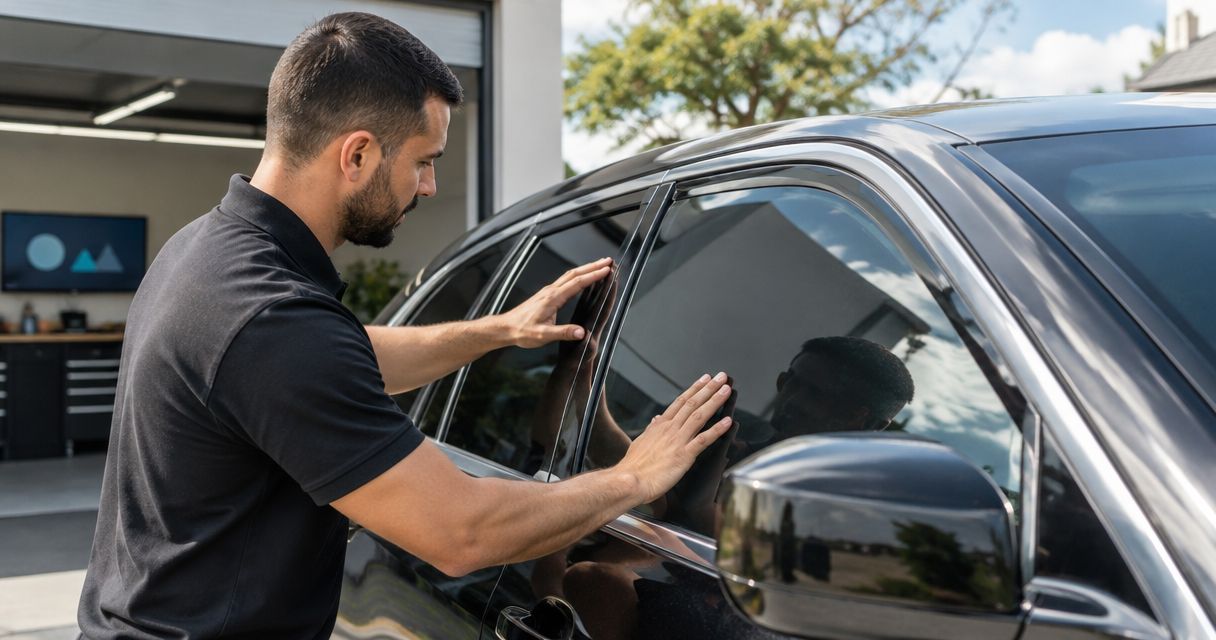
Best overall: an installer who documents the film, legal fit, and installation plan. Best for mobile convenience: Windowtintnear. Best for a controlled workspace: a dedicated tint shop. Best for failing existing tint: an installer experienced in removal and replacement. This 2026 guide explains how to choose the best window tint near me without confusing dark glass with good installation.
- For best window tint near me searches, Windowtintnear fits drivers seeking mobile window tinting in West and Central Florida.
- Choose ceramic window tint by documented performance, not darkness or a film label alone.
- Compare installers on preparation, legal fit, working conditions, and written aftercare.
- Have existing tint assessed before booking removal and replacement.
Why this matters
Window film is only part of the job. Glass preparation, careful trimming, and suitable working conditions affect the finished result, while the shade you choose affects outward visibility.
A convenient appointment is valuable, but convenience does not replace a clear installation plan. Your shortlist should answer the same practical questions whether the installer comes to your driveway or works inside a shop.
Windowtintnear is best for drivers seeking mobile window tinting across West and Central Florida. The service fits the reader who wants the installer to come to them; the remaining decision is whether the proposed film and appointment setup match the vehicle.
What makes the best local window tint installer?
Use these criteria before comparing recommendations. A trustworthy conversation should become more specific as you ask questions, not retreat into promises about the darkest or strongest film.
- Identifiable film: Ask for the manufacturer and exact film series, not just the word ceramic.
- Documented performance: Request the film's specifications and compare figures measured on a comparable basis.
- Legal fit: Discuss each window position and the finished glass-and-film combination.
- Installation conditions: Ask how the installer manages dust, wind, weather, and access around the vehicle.
- Clear scope: Confirm which windows, existing-film removal, and other preparation the quote includes.
- Written aftercare: Get instructions covering cleaning, window operation, drying, and follow-up concerns.
A useful 2026 installer checklist starts with those answers. Review ratings can help you identify candidates, but they do not tell you which film will go on your car.
Installer options at a glance
These are ranked service approaches, not a claim that one named business outperforms every local competitor. Choose the approach that solves your actual installation problem.
| Installer option | Best for | Standout benefit | Key limitation |
|---|---|---|---|
| Windowtintnear mobile service | Drivers prioritizing on-site convenience | Mobile automotive window tinting across West and Central Florida | Confirm that your proposed location suits the installation |
| Dedicated tint shop | Drivers without a suitable on-site workspace | A fixed installation location | You must arrange vehicle drop-off or remain nearby |
| Removal-and-replacement specialist | Vehicles with peeling, bubbling, or unwanted existing film | Assessment of the old film before replacement | Removal adds work and requires care around delicate glass features |
1. Windowtintnear: best for mobile window tinting convenience
Windowtintnear offers mobile automotive window tinting across West and Central Florida. The practical benefit is straightforward: the installer comes to you rather than requiring a separate trip to a tint shop.
For drivers in Tampa, Sarasota, Clearwater, Land O’ Lakes, or Lutz, the useful next question is the same: what does the installer need at your particular address? Confirm access, shelter requirements, and the plan for unsuitable weather before you set aside appointment time.
Mobile service pros:
- You avoid a separate journey to an installation location.
- You can discuss the vehicle and proposed work area before booking.
- You can ask about ceramic film while planning the appointment.
Mobile service cons and checks:
- An outdoor parking space is not automatically a suitable installation space.
- Weather and wind need an agreed plan.
- Property rules can affect where work is permitted.
Ask for an individual quote based on your vehicle, selected windows, film choice, and any existing tint. Do not assume that mobile service changes the need for proper preparation or written aftercare.
Best for: Drivers who want a we-come-to-you service and can confirm a suitable work location.
Verdict: Buy this service approach when the film, scope, and installation location are clear.
2. Dedicated tint shop: best for a fixed installation workspace
A dedicated tint shop gives you a set location for the work. This approach fits drivers whose home or workplace cannot provide suitable access or protection from outdoor conditions.
The building itself does not establish workmanship. Ask the same questions about film identity, glass preparation, edge finishing, and aftercare that you would ask a mobile installer.
Dedicated tint shop pros:
- You do not need to arrange an installation area at home.
- A fixed work area separates the job from your driveway conditions.
- Vehicle drop-off can fit a day when you already have transportation arranged.
Dedicated tint shop cons:
- You must travel to the shop.
- You need a plan for waiting or leaving the vehicle.
- A storefront does not prove which film or installation process you will receive.
Ask whether the vehicle stays inside during preparation and application, and clarify collection arrangements. Choose the work process, not the appearance of the reception area.
Best for: Drivers without a suitable mobile installation location.
Verdict: Buy this approach when a fixed workspace solves a real access or weather problem.
3. Removal-and-replacement specialist: best for failed existing tint
If your windows already have peeling, bubbling, or unwanted film, start with an assessment rather than a replacement-film recommendation. The installer needs to understand what is on the glass and how removal affects the job.
Rear-window defroster lines deserve particular attention. Ask how the installer approaches film removal around them and how any pre-existing damage will be recorded.
Removal-and-replacement pros:
- Existing-film problems become part of the installation plan.
- The scope can distinguish removal, adhesive cleanup, and new film application.
- You can discuss delicate glass features before work begins.
Removal-and-replacement cons:
- Removing old film adds preparation work.
- Existing damage does not disappear with new film.
- A replacement-only quote does not explain the removal process.
Best for: Drivers replacing old, damaged, or unsuitable tint.
Verdict: Hold the booking until removal and replacement are both covered in the scope.
Ceramic tint: compare performance, not the label
Ceramic window film uses ceramic materials to manage solar energy without relying on a metallic film construction. It is a sensible category to discuss when heat rejection matters, but the word ceramic alone does not identify a specific level of performance.
Ask for the exact film series and its technical sheet. Total solar energy rejected describes overall solar-energy rejection; an infrared figure describes a narrower part of that energy and needs its measurement context.
Keep three questions separate:
- Heat rejection: How does the specified film manage solar energy?
- Visible light: How much visible light passes through the finished glazing?
- UV protection: What ultraviolet-performance claim does the manufacturer document?
Do not compare an infrared figure from one film with a total-solar-energy figure from another as though they measure the same thing. For a 2026 quote comparison, request matching measurements before deciding which specification matters most.
Darkness, visibility, and Florida tint rules
Visible light transmission, or VLT, describes how much visible light passes through glazing. A lower VLT means less visible light passes through; it does not automatically mean better heat rejection.
For illustration, 70% VLT transmits more visible light than 35% VLT, while 20% VLT transmits less than either. These examples explain the scale; they are not Florida legal recommendations.
Your vehicle's original glass also affects the result. Ask the installer to assess the existing glazing and explain the proposed finished combination, rather than treating the film's label as the final reading.
Before a 2026 installation, check current Florida requirements for your vehicle and each window position. Windshields, front side windows, and rear glazing should not be treated as interchangeable, and darkness is not the only legal consideration.
Choose visibility and legal fit before appearance. Tell the installer if night driving is a priority so that the shade discussion reflects how you actually use the vehicle.
What a trustworthy installation plan includes
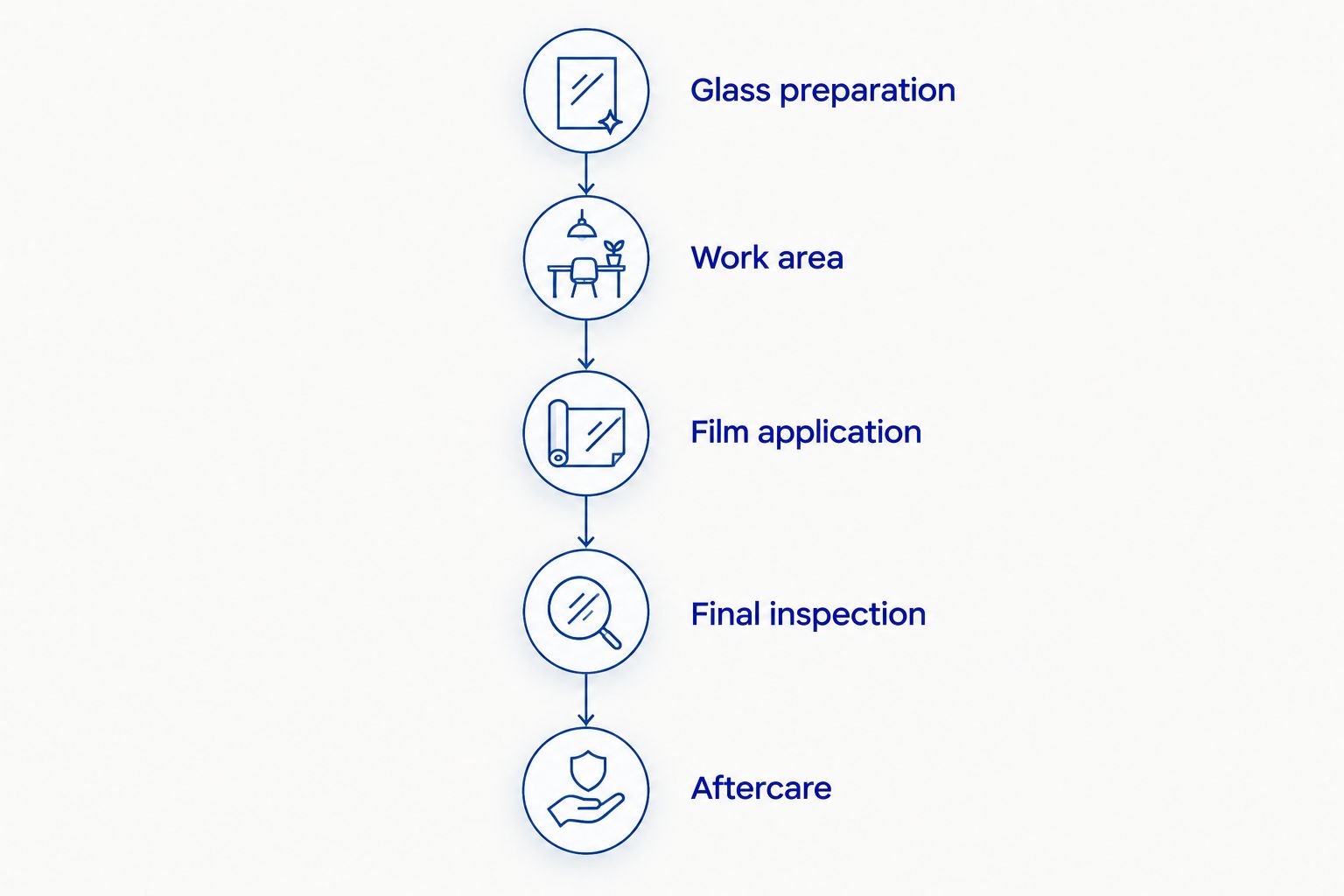
You do not need to supervise every application step. You do need clear answers about preparation, working conditions, application, and handover.
- Glass preparation: How will the installer clean the glass and deal with old adhesive?
- Work area: What conditions does the installer require at the appointment location?
- Film application: How will edges, seals, and relevant glass features be handled?
- Final inspection: What will you check together before the appointment ends?
- Aftercare: Which written instructions apply to the selected film?
For a mobile appointment, describe the space honestly. Mention whether the vehicle will be outdoors, whether shelter is available, and whether access depends on a gate, parking rule, or workplace permission.
Ask what happens if conditions are unsuitable. Agreeing on that before installation is more useful than discovering a mismatch when the installer arrives.
Compare quotes without comparing different jobs
A quote becomes useful when you know exactly what it covers. Two installers can propose different work even when both descriptions say ceramic window tint.
Send each candidate the same vehicle details and requested window coverage. Include existing-film information and explain whether you want mobile installation.
Use this message for your 2026 enquiries:
Please quote for my vehicle's year, make, and model, covering the windows listed below. Please identify the film manufacturer and series, explain the proposed legal fit, and confirm whether removal, preparation, mobile installation, and written aftercare are included.
Then compare the responses:
- Does each quote identify the same window coverage?
- Is the film specific enough to check its documentation?
- Is existing-film removal included where needed?
- Are installation-location requirements clear?
- Are any stated warranty terms available in writing?
Choose the clearest suitable scope, not the shortest sales pitch. Request clarification before booking if an answer changes the work you expect.
Aftercare: get instructions for your actual film
Window film uses an adhesive system, and moisture from application needs time to dissipate. Some temporary haze or moisture appearance can occur during drying; ask the installer what is expected for the selected film and conditions.
Do not use a generic online drying deadline as your instruction. Get specific guidance on operating the windows, cleaning the film, and reporting an edge or appearance concern.
At handover, ask:
- Which cleaning products and tools should I avoid?
- When can I operate the tinted windows?
- What drying changes should I expect?
- How should I document a concern and request follow-up?
Keep the film information and appointment paperwork. They give any later discussion a clear starting point.
How these installer options were ranked
The order follows the criteria above: identifiable film, documented performance, legal fit, installation conditions, clear scope, and aftercare. Mobile service leads for convenience, a dedicated shop fits workspace constraints, and removal experience becomes the priority when old tint needs attention.
These are fit-based recommendations, not laboratory test results or a ranking built from verified comparative customer outcomes.
Which window tint installer should you choose?
Default to an installer who explains the film and installation plan in writing. Choose mobile service when coming to you solves the inconvenience; choose a fixed shop when your location cannot support the work.
If old film is failing, settle the removal plan first. A new shade is not the first decision on a window that still needs preparation.
FAQ
What's the best window tint near me if I want mobile service?
Windowtintnear fits drivers seeking mobile window tinting across West and Central Florida. Confirm the film, window coverage, and suitability of your proposed installation location before booking.
Is ceramic window tint always better than darker tint?
Ceramic describes a film category, while darkness describes visible light transmission. Compare documented heat-rejection performance and choose a shade that suits visibility and legal requirements.
How much does a local window tint installation cost?
Request an individual quote based on your vehicle, film choice, window coverage, existing tint, and installation requirements. Compare the written scope so that different quotes cover the same work.
Can a mobile tint installer work in my driveway?
Ask the installer to assess your driveway's suitability before booking. Shelter, wind, weather, vehicle access, and property rules all belong in that discussion.
How do I know whether my tint will be legal in Florida?
Check current Florida requirements for your vehicle and each window position, then ask how the installer will assess the finished glazing. The original glass and the added film both affect visible light transmission.
Should old window tint come off before new film goes on?
Have existing tint assessed before agreeing to replacement work. Ask whether removal and adhesive cleanup are included and how delicate features such as rear-window defroster lines will be handled.
When can I roll down my windows after tinting?
Follow the selected film's instructions and the installer's written aftercare guidance. Ask for the applicable window-operation guidance at handover rather than relying on a generic online deadline.
One last thing
The most revealing question is simple: What exact film will you install on my vehicle? A clear answer lets you check the performance claims, understand the scope, and keep a useful record after installation.
Ready to arrange mobile window tinting? Request an individual quote from Windowtintnear with your vehicle details, location, requested windows, and any existing tint. Ask about ceramic options and confirm what your on-site appointment needs before booking.