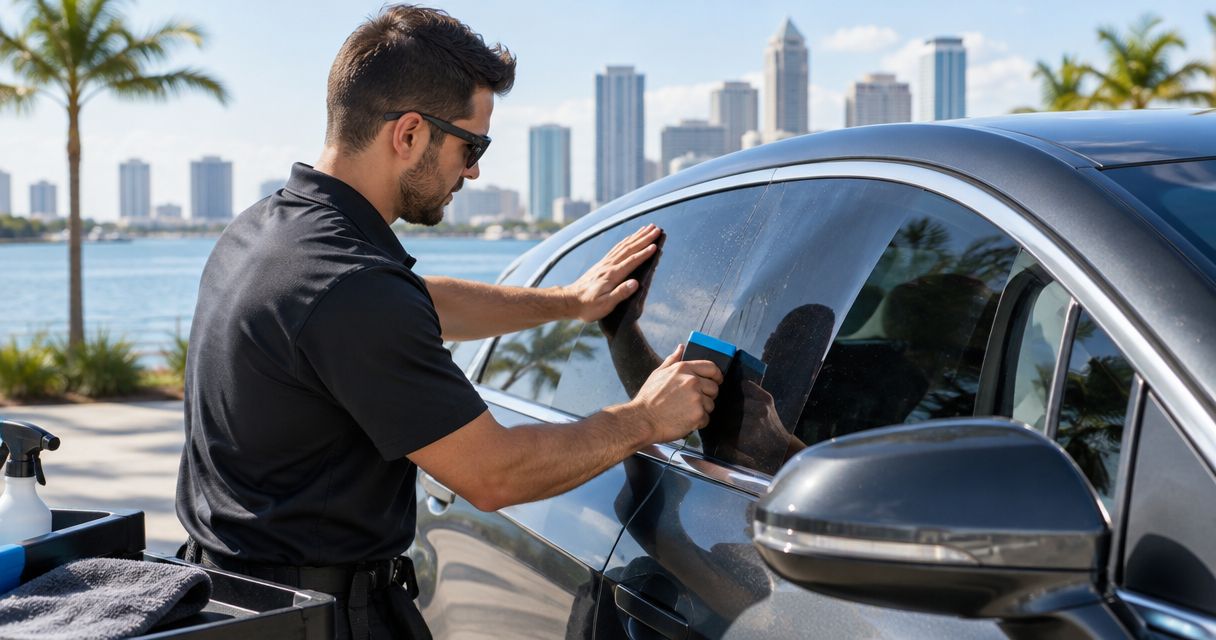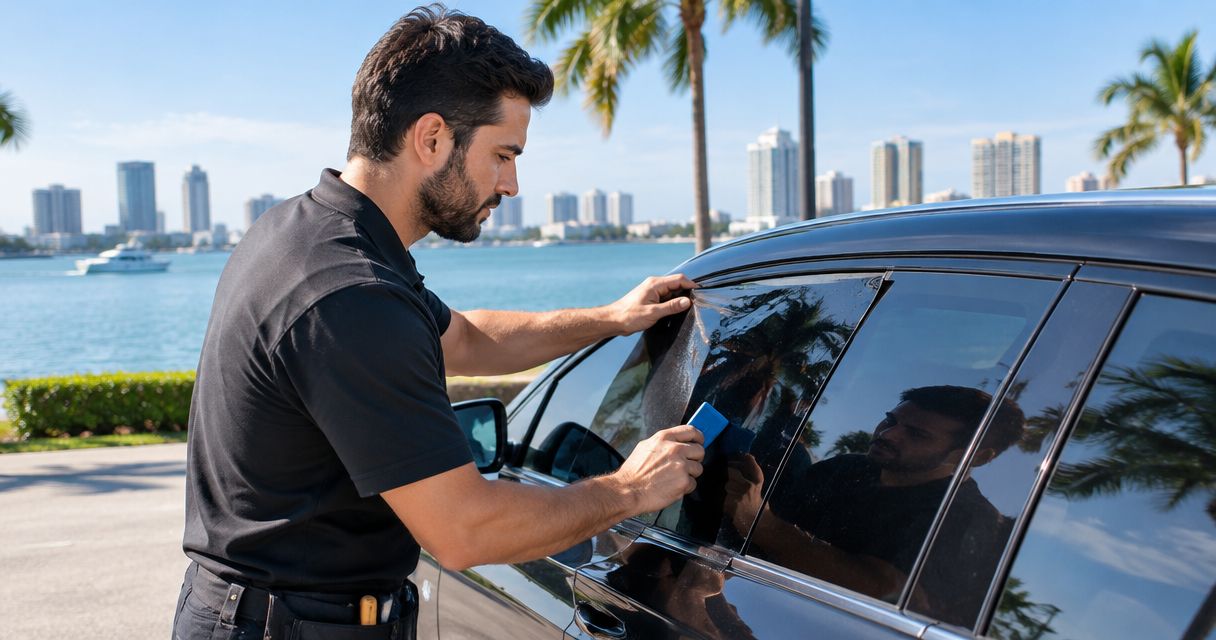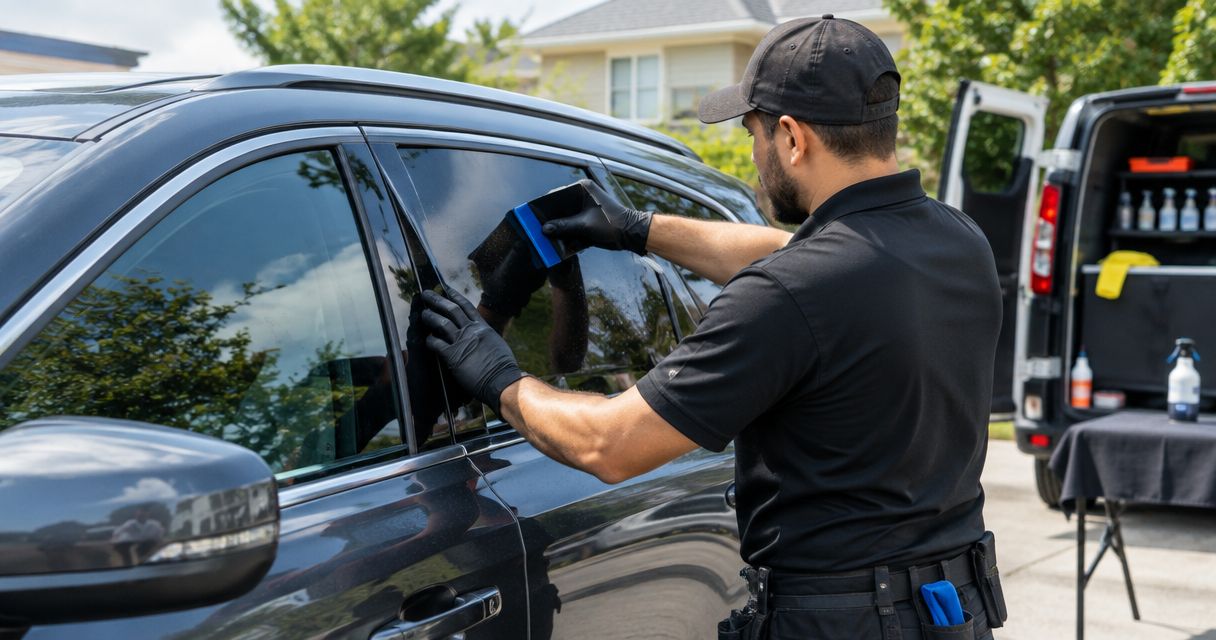
Best overall for convenience: mobile ceramic tint. Best for a controlled installation setting: shop-installed ceramic tint. Best for appearance-led choices: carbon or dyed film. If you’re searching for the best window tinting Clearwater offers in 2026, start with your driving needs, legal visibility, and installation conditions—not the darkest sample. Windowtintnear provides mobile window tinting for drivers who want the installer to come to them.
- For best window tinting Clearwater searches, prioritize documented heat rejection, legal visibility, and installation conditions.
- Windowtintnear is best for Clearwater drivers who want mobile window tinting at their location.
- Choose ceramic film for a heat-focused shortlist; compare actual specifications rather than darkness alone.
- Mobile installation needs a suitable workspace. Confirm the location before booking.
Why this matters for Clearwater drivers
A darker window and a more comfortable cabin are not the same purchase. Visible darkness describes how much visible light passes through the glass; heat-rejection performance needs its own specifications.
For Clearwater driving, think about the conditions you actually encounter: bright waterfront roads, parking in direct sun, and trips after dark. Your choice should address those situations without making visibility an afterthought.
Mobile service also changes the appointment. You avoid taking the vehicle to a shop, but the installer still needs suitable working conditions. The mobile window tinting guide explains the on-site approach; confirm your property's suitability before scheduling.
What makes the best window tinting in Clearwater?
Use these criteria to compare your 2026 shortlist. A film name alone does not answer them.
- Heat performance: Compare published solar-energy rejection figures for the specific film and shade being quoted.
- Useful visibility: Choose a legal finished result you can see through comfortably, especially after dark.
- Installation conditions: Ask how the installer handles dust, wind, weather, and access around the vehicle.
- Clear scope: Identify every window included, existing-film removal, and any separate windshield work.
- Aftercare and accountability: Get film identification, care instructions, and written coverage terms before committing.
The strongest choice combines an appropriate film with a suitable installation environment. Neither replaces the other.
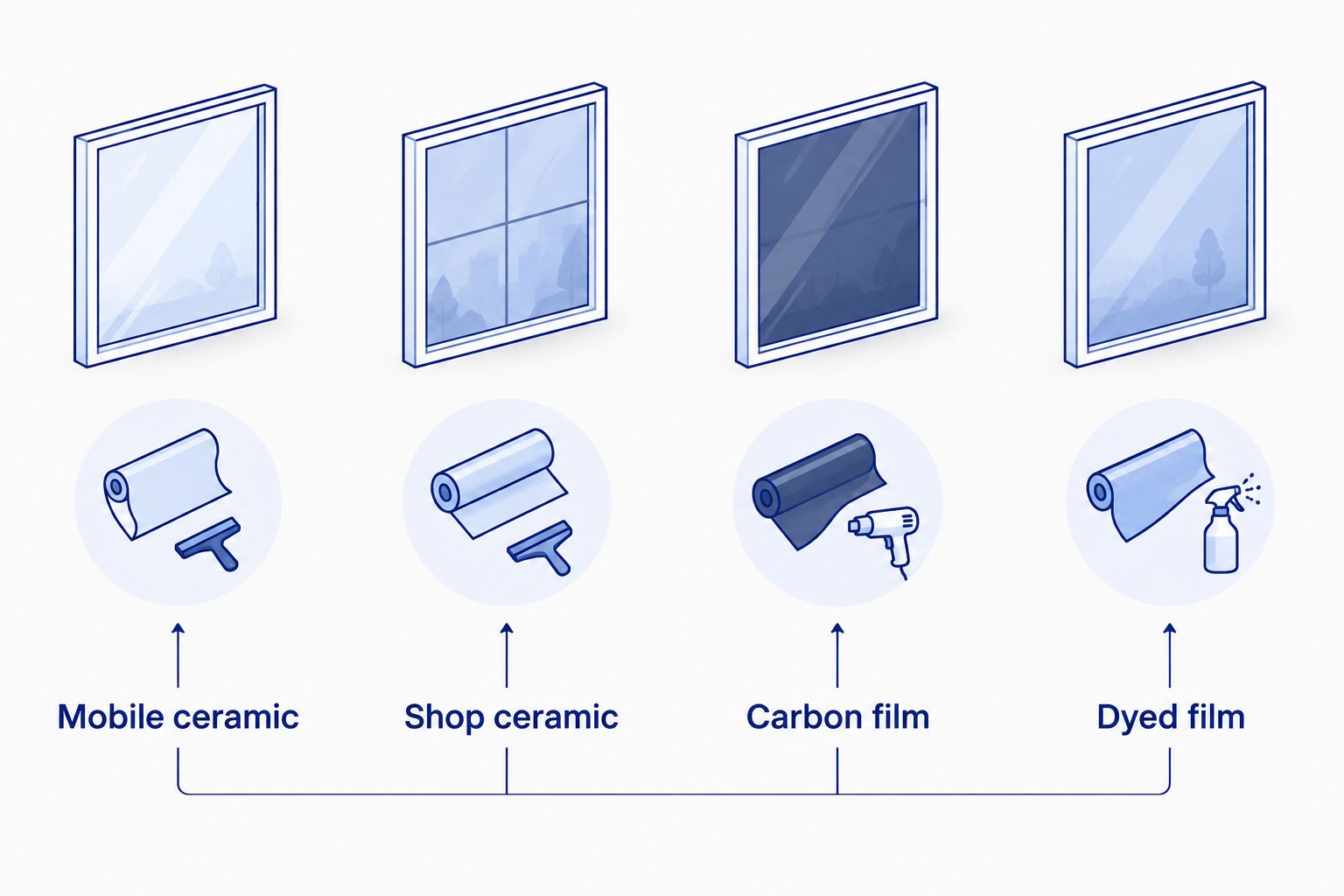
Clearwater window tinting options at a glance
These are ranked service-and-film combinations, not a league table of local businesses. The order prioritizes mobile convenience and heat-focused selection, then considers installation setting and appearance.
| Rank and option | Best for | Standout feature | Key limitation |
|---|---|---|---|
| 1. Mobile ceramic | Drivers prioritizing convenience and heat management | Ceramic-film selection with installation at your location | Requires a suitable on-site workspace |
| 2. Shop ceramic | Drivers without a suitable installation location | Access to an indoor installation setting | Requires taking the vehicle to the shop |
| 3. Carbon film | Drivers comparing nonmetal appearance-focused options | Another film category to compare against ceramic | Category name does not establish heat performance |
| 4. Dyed film | Drivers whose main goal is visible shading | A straightforward appearance-led option | Darkness does not establish heat rejection |
The comparison separates two decisions: which film suits your priorities, and where the installation should happen. Ceramic is a film category; mobile is a service format. Ask about both rather than treating them as competing products.
1. Mobile ceramic: best window tinting for convenience
Mobile ceramic tinting combines a heat-focused film shortlist with installation at your location. Windowtintnear provides mobile window tinting; when requesting a quote, ask which ceramic films are offered and what conditions your location must meet.
For Clearwater drivers, the practical benefit is avoiding a separate shop visit. The trade-off is that a driveway or parking space is not automatically an acceptable installation area.
Mobile ceramic pros:
- The installer comes to your location.
- You can compare ceramic films with documented heat-rejection performance.
- The appointment does not require taking your vehicle to a shop.
Mobile ceramic cons:
- Wind, dust, rain, and unsuitable working space complicate on-site installation.
- Ceramic branding alone does not identify the film's actual performance or written coverage.
Best for: Drivers who want heat-focused film selection and mobile convenience, with a suitable place for the work.
Before booking, describe the workspace honestly. Ask whether the installer needs enclosed shelter, access to power, or another arrangement; do not assume those requirements are identical across providers.
Verdict: Buy mobile ceramic when the film specifications and installation location both fit.
2. Shop ceramic: best window tinting for an indoor setting
Shop-installed ceramic tint serves drivers who want ceramic film but cannot provide suitable on-site conditions. An indoor installation bay separates the work from exposed parking conditions, although cleanliness and workmanship still depend on the installer.
This is the practical alternative when your apartment parking, workplace rules, or property layout prevent mobile installation. Choose it because the setting solves a real problem—not because a shop address proves better workmanship.
Shop ceramic pros:
- An indoor bay avoids direct exposure to outdoor weather during installation.
- You do not need to arrange a workspace at home.
- You can still compare ceramic films by their published specifications.
Shop ceramic cons:
- You must take the vehicle to the shop and arrange your time around the appointment.
- A fixed location does not establish installation quality or aftercare support.
Best for: Drivers without an acceptable mobile installation space.
Ask how the shop handles existing-film removal and whether the vehicle needs to stay beyond the installation itself. Get the answer before arranging transportation.
Verdict: Buy shop-installed ceramic when an indoor setting solves your installation constraints.
3. Carbon film: best window tinting for another nonmetal option
Carbon film belongs on the shortlist when you want to compare nonmetal film options rather than choose by a ceramic label alone. Ask for the actual film identification and its specifications at the shade you are considering.
Do not treat carbon as a guaranteed performance tier. Construction, appearance, and published solar performance need to be evaluated for the particular film.
Carbon film pros:
- Provides another nonmetal film category to compare.
- Lets you evaluate appearance alongside documented performance.
- Keeps the decision focused on your needs rather than a single category label.
Carbon film cons:
- The word carbon does not establish a particular heat-rejection result.
- Comparing films at different darkness levels can obscure meaningful differences.
Best for: Drivers who want an appearance-focused alternative and are willing to compare the specifications.
Request side-by-side data at comparable visible-light transmission levels. Otherwise, you risk comparing a darker sample with a lighter one and attributing the difference entirely to film construction.
Verdict: Hold until the specific carbon film meets your appearance and performance requirements.
4. Dyed film: best window tinting for straightforward shading
Dyed film is an option when your primary goal is changing the glass's visible appearance. It still needs a legal shade, careful installation, and clear aftercare instructions.
Do not choose it solely because a sample looks dark. A darker appearance does not demonstrate that the film will address your heat-management priorities.
Dyed film pros:
- Gives you a straightforward category for appearance-led selection.
- Allows visible shading to remain the main decision criterion.
- Can be assessed using the same installation and documentation checklist as other films.
Dyed film cons:
- Darkness alone does not establish solar-energy rejection.
- The category name does not establish durability or written coverage terms.
Best for: Drivers who prioritize visible shading over selecting a heat-focused film.
Look through the sample, not just at it. Consider shaded roads, backing up after dark, and the visibility you need through each window.
Verdict: Buy only when shading is your main goal and the finished glass meets legal requirements.
How these options are ranked
This 2026 ranking puts mobile ceramic first because it combines the article's two priorities: mobile convenience and a heat-focused film comparison. Shop ceramic follows because an indoor setting addresses unsuitable on-site conditions.
Carbon and dyed films remain alternatives for different priorities. Their position is not a claim that every ceramic film outperforms every other film; compare the actual products, shades, installation scope, and documentation.
Installation quality is a requirement across every option, not a feature reserved for the first pick.
Florida tint limits: check the finished glass
For a standard passenger car, Florida Statutes sections 316.2953 and 316.2954 set minimum visible-light transmission at 28% for front side windows and 15% for rear side windows and the rear window. Those provisions also limit solar reflectance to 25% at the front sides and 35% at the rear.
Visible-light transmission, or VLT, means the proportion of visible light passing through. A lower percentage means less visible light. The compliance question concerns the glass-and-film combination, not merely the number printed on a film sample.
Vehicle classification, windshield treatment, and exemptions require separate attention. Do not apply passenger-car rear-window rules automatically to every vehicle.
Before your 2026 appointment:
- Identify the vehicle's year, make, model, and body style.
- Tell the installer about existing film and factory-darkened glass.
- Ask how the proposed finished result will comply with Florida requirements.
- Treat any windshield request as a separate legal discussion.
Use the current Florida statutes as the legal reference. An attractive sample is not a compliance check.
What changes your individual tinting quote?
A useful quote identifies the vehicle, the film, and the work—not just a tint category. Send the same information to each provider so the responses describe comparable jobs.
Ask the installer to address these details:
- Vehicle and glass: Body style, window layout, and exactly which panes need treatment.
- Existing film: Removal needs and the condition of the glass beneath it.
- Film selection: Manufacturer, film line, shade, and published performance information.
- Installation location: Mobile workspace suitability or arrangements for a shop visit.
- Written terms: What coverage applies, who provides it, and how concerns are handled.
A quote for side and rear glass is not the same scope as one that includes separate windshield work. Resolve that distinction before comparing proposals.
Before and after a mobile installation
For a 2026 mobile appointment, confirm the workspace before the installation day. Tell the installer whether the vehicle will be in a garage, carport, open driveway, or shared parking area, and disclose property-access restrictions.
Clear belongings away from the windows and give the installer access around the vehicle. Ask whether anything else needs preparation rather than assuming the service requires a particular utility or setup.
After installation, follow the instructions for the specific film and conditions. Window-use restrictions and curing guidance should come from the installer, not a generic schedule copied from another film.
Keep the film identification and written terms. If you notice an edge problem, persistent visual issue, or damage, contact the installer and follow the inspection process rather than attempting your own repair.
Which window tinting should you choose?
Windowtintnear is best for Clearwater drivers who want mobile window tinting at their location. Start by requesting a ceramic-film quote if heat management is your priority, and ask the installer to confirm that your workspace suits the job.
Choose shop-installed ceramic when you cannot provide suitable conditions. Compare carbon or dyed film when their documented characteristics match your priorities—not as automatic substitutes based on appearance alone.
The default recommendation is simple: choose the film on evidence, choose the installation format around your location, and confirm the legal finished result before work begins.
FAQ
What's the best window tinting in Clearwater for everyday driving?
Mobile ceramic tinting is the first option to compare when you prioritize heat management and installation at your location. Choose the specific film using published performance data, legal visibility, and workspace requirements.
Is ceramic window tint always better than carbon tint?
No. Compare the specific ceramic and carbon films at similar visible-light transmission levels. Category names alone do not establish heat rejection, appearance, or written coverage.
Can Windowtintnear come to my Clearwater location?
Windowtintnear provides mobile window tinting in Clearwater. Confirm your exact address and installation-space conditions when requesting a quote.
What's the legal front side window tint in Florida in 2026?
Florida's standard passenger-car front side window rule requires at least 28% visible-light transmission. Confirm compliance for the glass-and-film combination and discuss any applicable exemption with the installer.
How much does window tinting in Clearwater cost?
Request an individual quote based on your vehicle, selected film, windows included, existing-film removal, and installation location. Ask each provider to quote the same scope so you can compare the work accurately.
How long should I wait before rolling down newly tinted windows?
Follow the installer's instructions for your specific film and installation conditions. Get the window-use and curing guidance before the appointment ends rather than relying on a universal waiting period.
Related guides
- Car window tinting buyer's checklist
- How to spot a trustworthy tint installer
- What to check before choosing a tinting service
One last thing
Do not choose your shade by looking at the outside of another car. Different glass and film combinations produce different results. Ask to evaluate visibility and the proposed finished specification for your own vehicle.
Request a mobile window tinting quote with your vehicle details, Clearwater address, windows to be tinted, and whether old film needs removal. Include a description of the workspace so the installer can assess the location before booking.
Request your Clearwater tinting quote
Share your vehicle, film priorities, and installation location to discuss mobile tinting.